

Synapse
PhysioEye Synapse
Connect Muscle Activity With Human Movement.
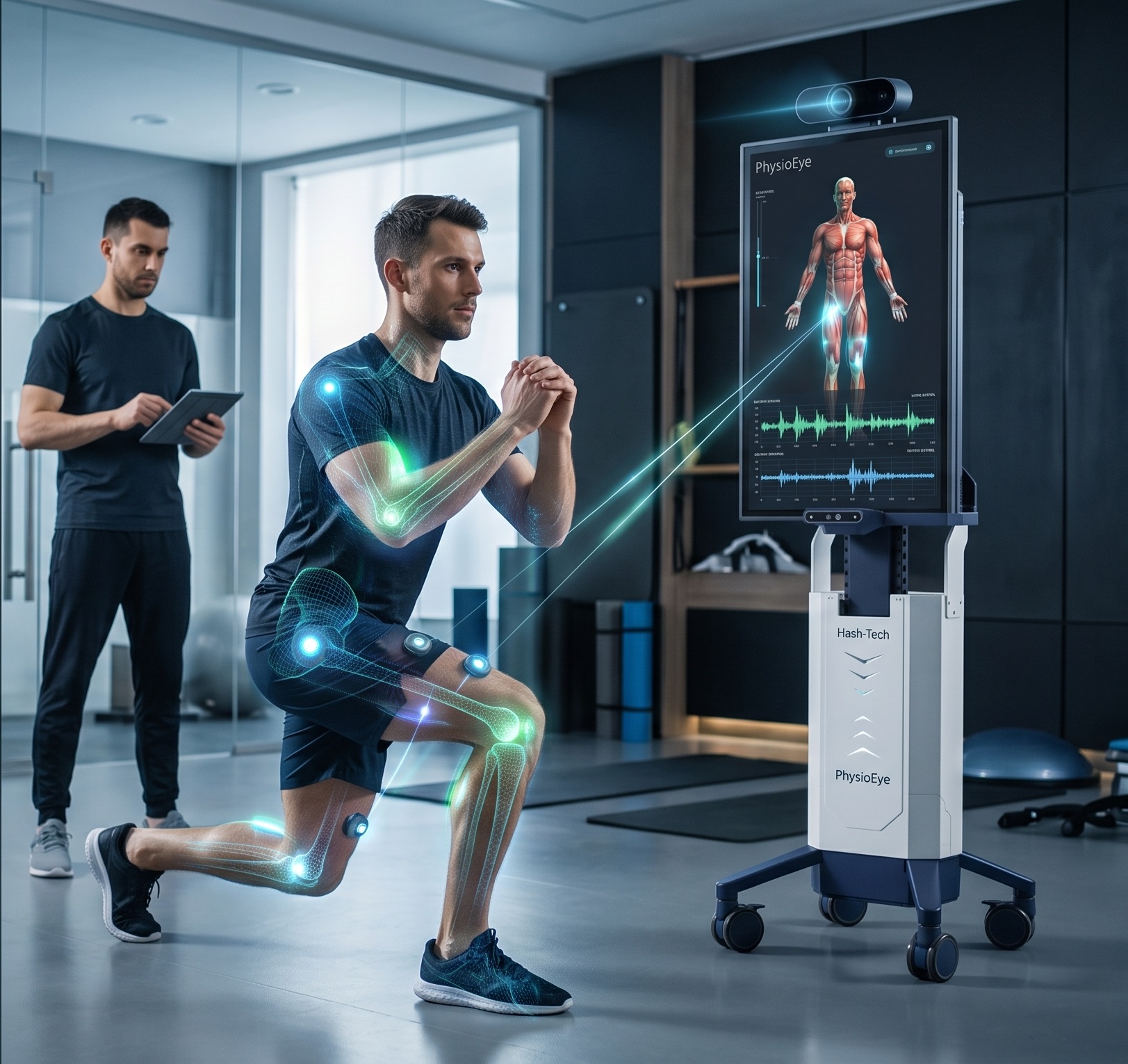
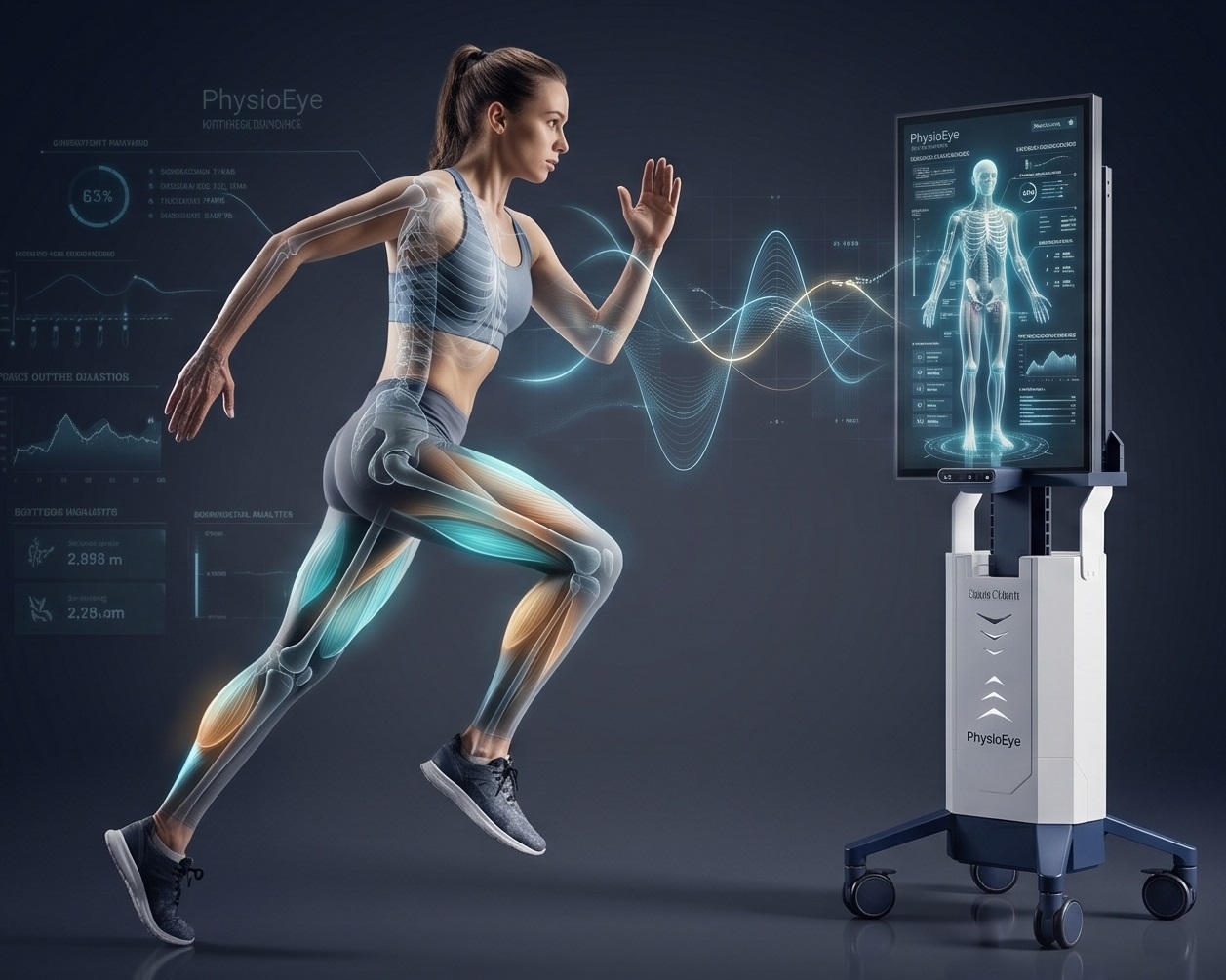
Combine wireless EMG analysis with markerless 3D biomechanics to understand when muscles activate, how they coordinate, and how muscle-activity patterns relate to movement performance.
PhysioEye Synapse extends movement assessment by adding information about electrical muscle activity. By processing EMG signals alongside compatible PhysioEye movement data, Synapse is designed to help healthcare professionals investigate muscle activation timing, coordination, asymmetry, and movement-related changes during rehabilitation and functional assessment.
Overview
Understand the Relationship Between Muscle Activity and Movement.
Observing movement reveals what the body does. Electromyography provides additional information about the electrical activity of selected muscles during that movement.
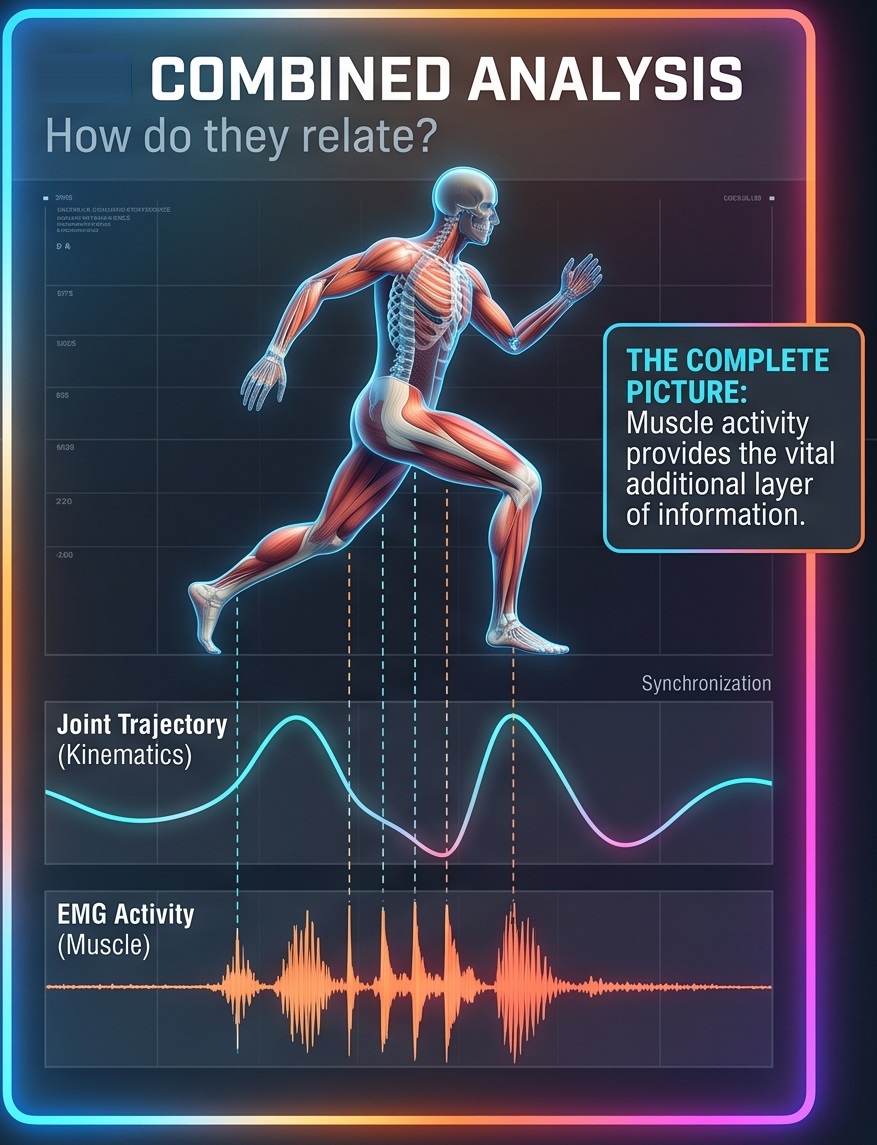
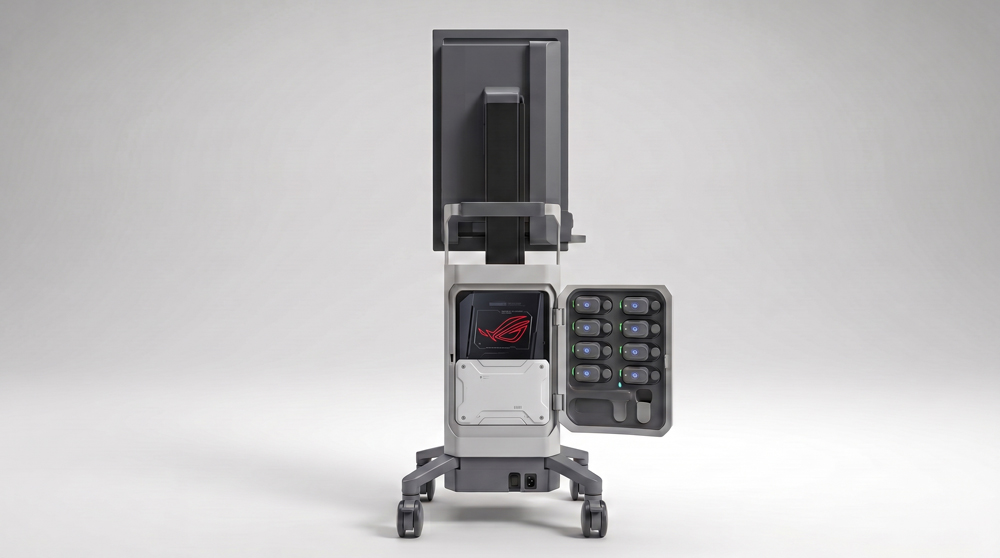
PhysioEye Synapse combines wireless EMG sensors attached to selected muscles with PhysioEye Core's movement-analysis capabilities. Its software processes the EMG signals and can align muscle-activity features with relevant movement events, joint kinematics, and functional tasks.
This combined approach is designed to provide a more detailed view of neuromuscular performance during assessment and rehabilitation
Perfect For

Rehabilitation Clinics
Physiotherapy Centers

Neurological Rehabilitation

Orthopedic Rehabilitation

Research and Clinical Innovation
Key Features
Wireless EMG Acquisition
Capture electrical muscle activity through wireless sensors attached to selected muscle groups.
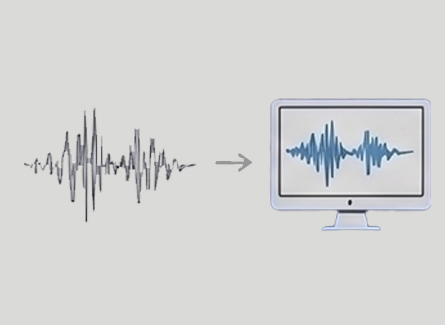
Signal Processing
Process acquired EMG signals to extract time-domain and frequency-domain features appropriate to the hardware and acquisition settings.
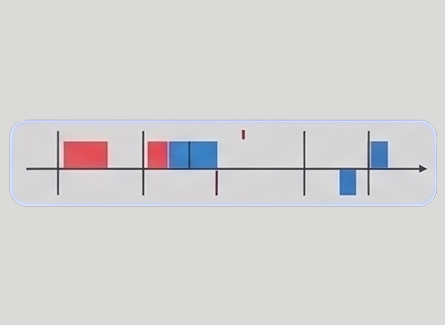
Activation Timing
Estimate the onset, offset, duration, and timing of muscle activation relative to a defined task or movement event.
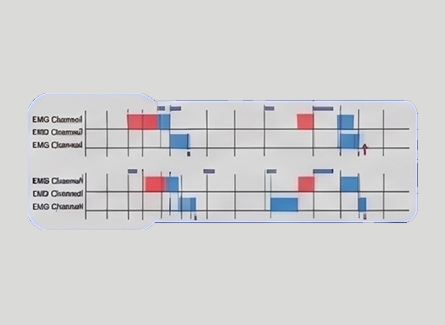
Muscle Coordination
Compare activation timing between selected muscles and, where appropriate, between the left and right sides.
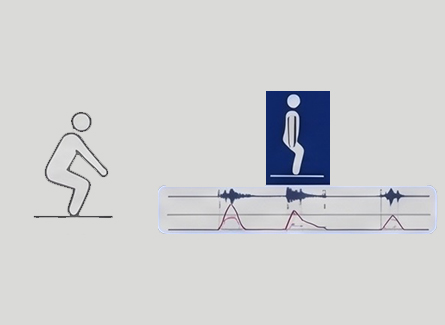
Movement-Synchronized Analysis
Relate EMG features to compatible PhysioEye measurements, including joint angles, movement phases, posture, and gait events.
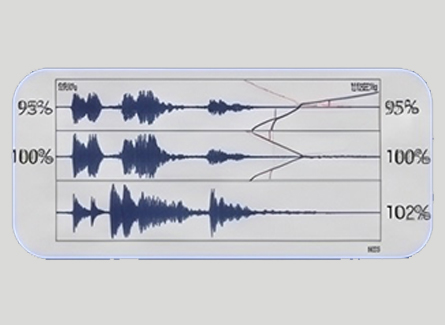
Longitudinal Comparison
Compare selected muscle-activity features across repeated assessments when sensor placement, acquisition settings, and normalization methods are sufficiently consistent.
Clinical Assessments
Integrated assessment tools for precise physical evaluation.
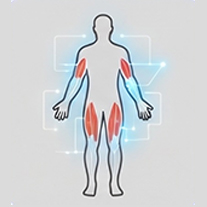
Neuromuscular Assessment
Add selected muscle-activity features to movement analysis for a more detailed assessment of neuromuscular performance.
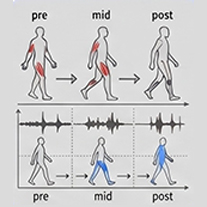
Rehabilitation Monitoring
Compare muscle-activation patterns and movement performance across appropriately standardized sessions.
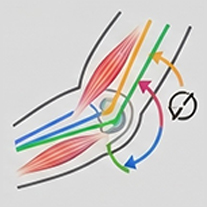
Movement Coordination
Investigate activation timing and relationships between selected muscles during defined tasks.
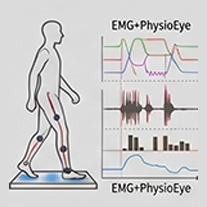
Gait and Functional Mobility
Combine EMG features with PhysioEye gait and functional-movement data when synchronized acquisition is supported.
Research and Protocol Development
Support structured collection and analysis of synchronized EMG and movement data for research and clinical innovation.
Comprehensive Assessment Outputs
A.Muscle Activation Timing & Amplitude
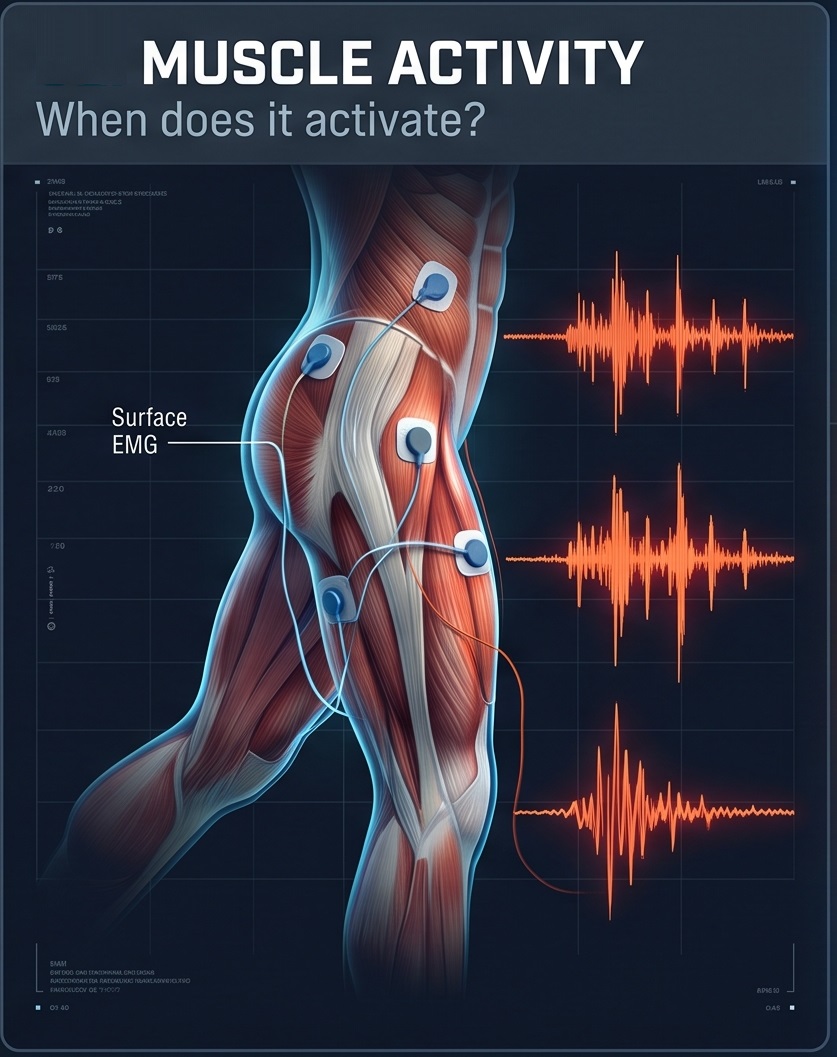
The software can extract timing-related features from processed EMG signals, including:
Activation onset.
Activation offset.
Activation duration.
Time to peak activation.
Peak timing relative to a task event.
Delay between activation of selected muscles.
Activation timing relative to gait or movement phases.
Root mean square (RMS) amplitude.
Mean absolute value (MAV).
Repeated-trial timing consistency
B. Muscle Coordination and Co-Activation
Where enough synchronized EMG channels are available, the software can support analysis of relationships between selected muscles, including:
Activation sequence across monitored muscles.
Timing differences between agonist and antagonist muscles.
Co-activation measures for selected muscle pairs.
Bilateral activation differences.
Relative timing between muscles participating in a functional task.
Changes in coordination across repeated trials.
Selected intermuscular coordination features.
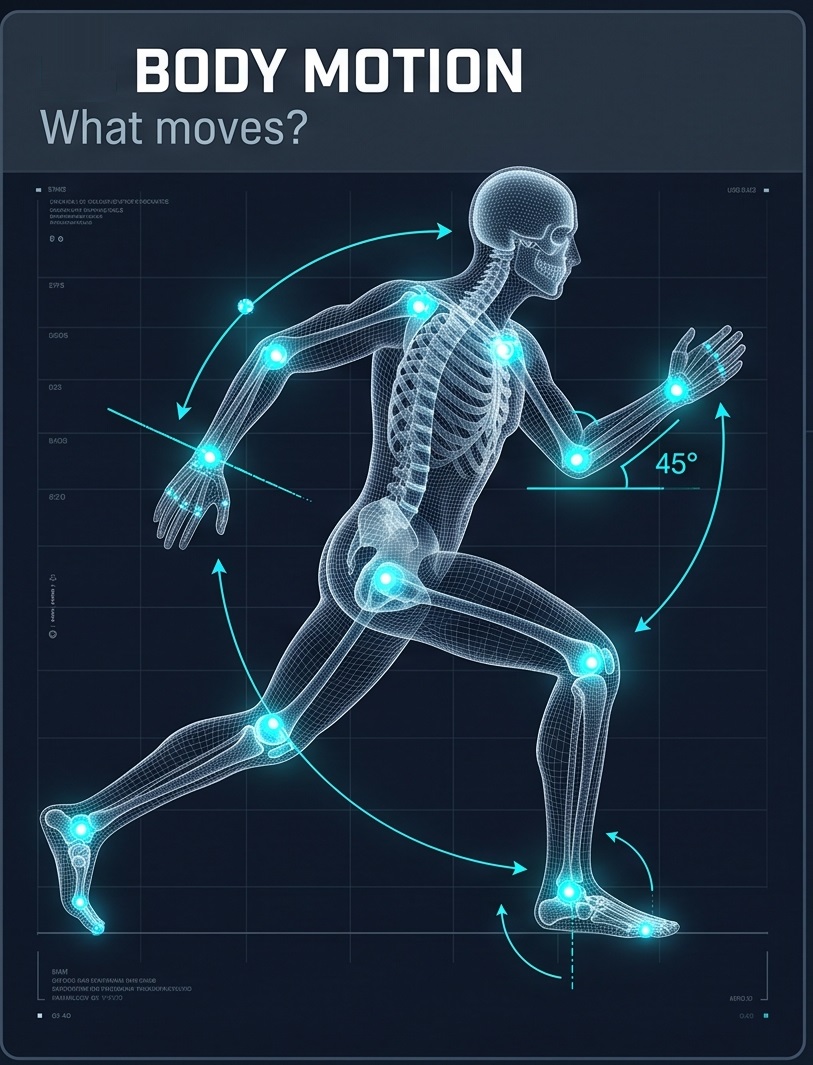
C.EMG Linked to 3D Movement
- Muscle activation relative to joint-angle changes.
- Activation timing during selected ROM protocols.
- Muscle-activity features during reaching or upper-limb movement.
- EMG patterns aligned with sit-to-stand phases.
- Muscle-activity timing during gait phases.
- Activation patterns associated with changes in walking speed or step timing.
- Bilateral EMG differences alongside left-right movement asymmetry.
- Activation patterns associated with movement compensation.
- Changes in activation features alongside posture and movement quality.
- Comparisons between EMG features and functional performance over time.
D. Functional Task Assessment
Synapse can be configured around defined functional tasks when the relevant muscles are instrumented and the movement protocol is supported.
Potential protocols include:
Gait and Walking
Sit-to-Stand
Upper-Limb Movement
Balance and Postural Tasks
Workflow
Protocol Selection
1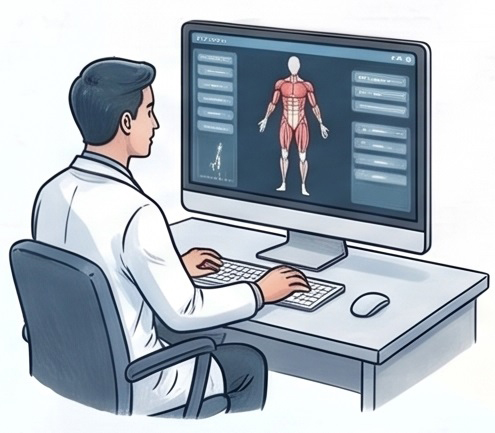 Select the patient profile, the muscles to be monitored, and the assessment protocol.
Sensor Placement
2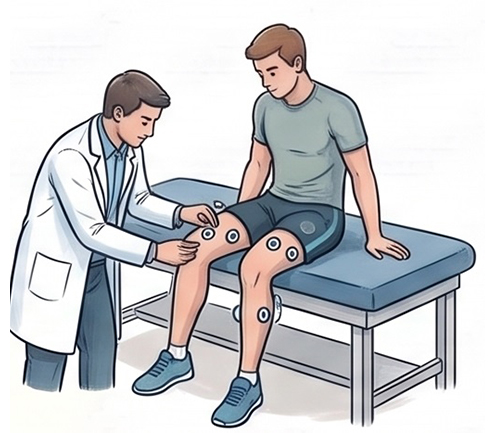 Attach the wireless EMG sensors to the selected muscle groups according to the defined protocol.
Synchronized Capture
3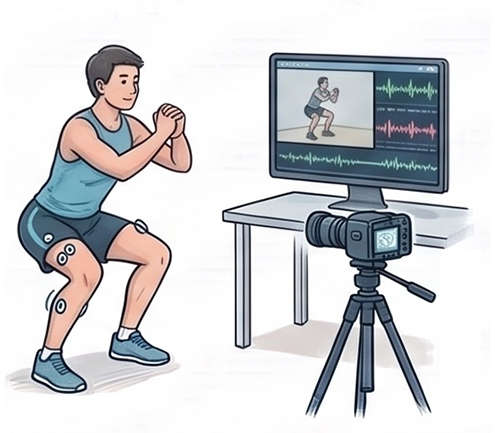 Record EMG signals alongside the compatible PhysioEye movement protocol, using verified synchronization.
]
AI and Signal Analysis
4 Extract supported activation, amplitude, frequency, coordination, and movement-linked features.
Report
5 Present the results with graphs, interpretation notes, and comparison with previous sessions.
Technical Specification
|
Specification |
Detail |
|---|---|
|
Number of EMG Wireless Sensors |
8 |
|
Sampling Rate |
2,000/4,000Hz |
|
Probe Weight |
13 g |
|
Battery life |
6h |
Part of the PhysioEye Ecosystem
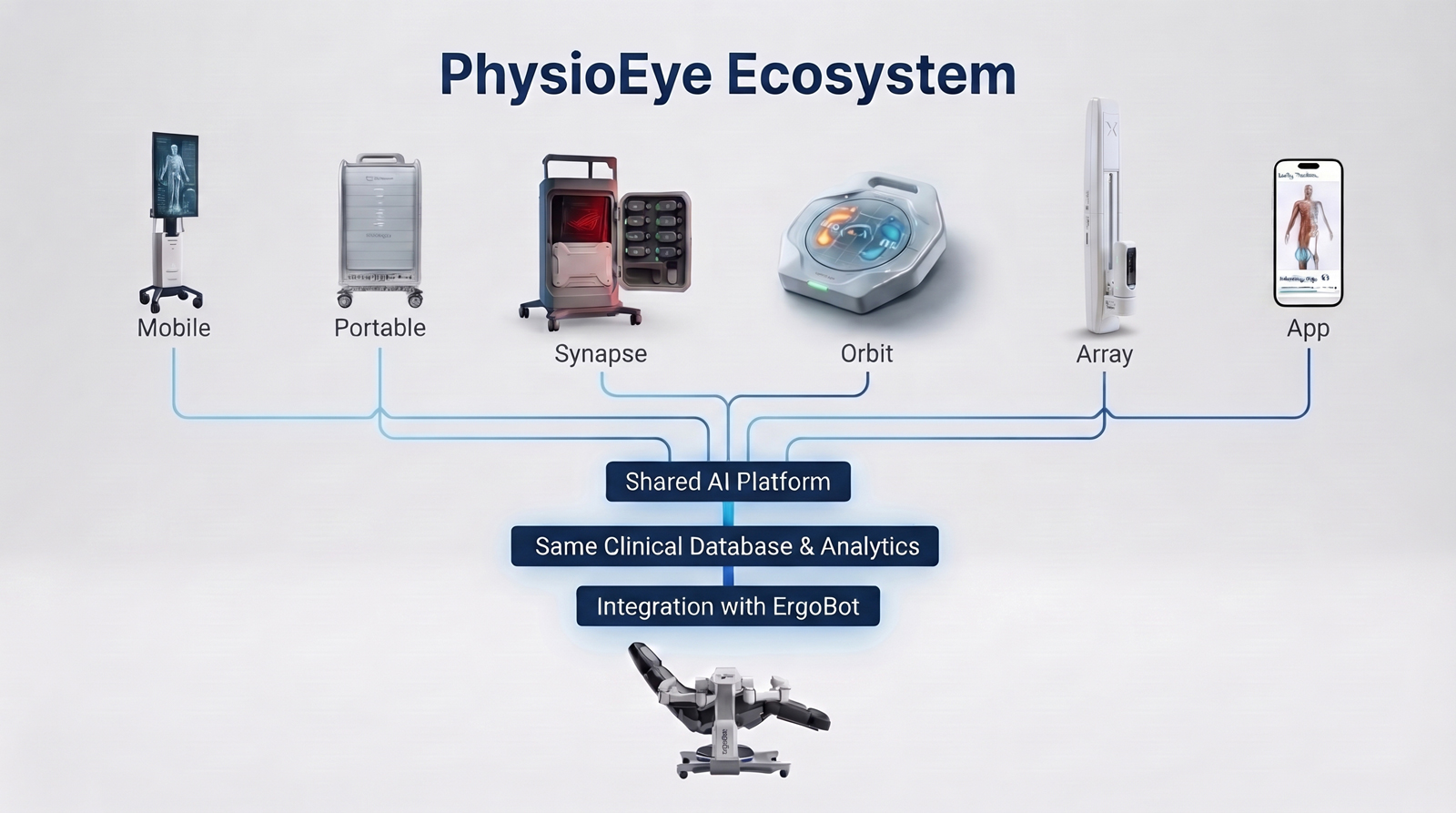
PhysioEye Core analyses movement and biomechanics. PhysioEye Synapse adds information about the electrical activity of selected muscles, helping clinicians investigate how muscle activation relates to movement performance.
Together, they are designed to support more detailed assessment and longitudinal monitoring during rehabilitation.
Frequently Asked Question
Integrates seamlessly with ErgoBot
Use assessment data from PhysioEye to automatically configure therapeutic interventions in ErgoBot.