HealthCore App
One Connected View of Every Resident's Health.
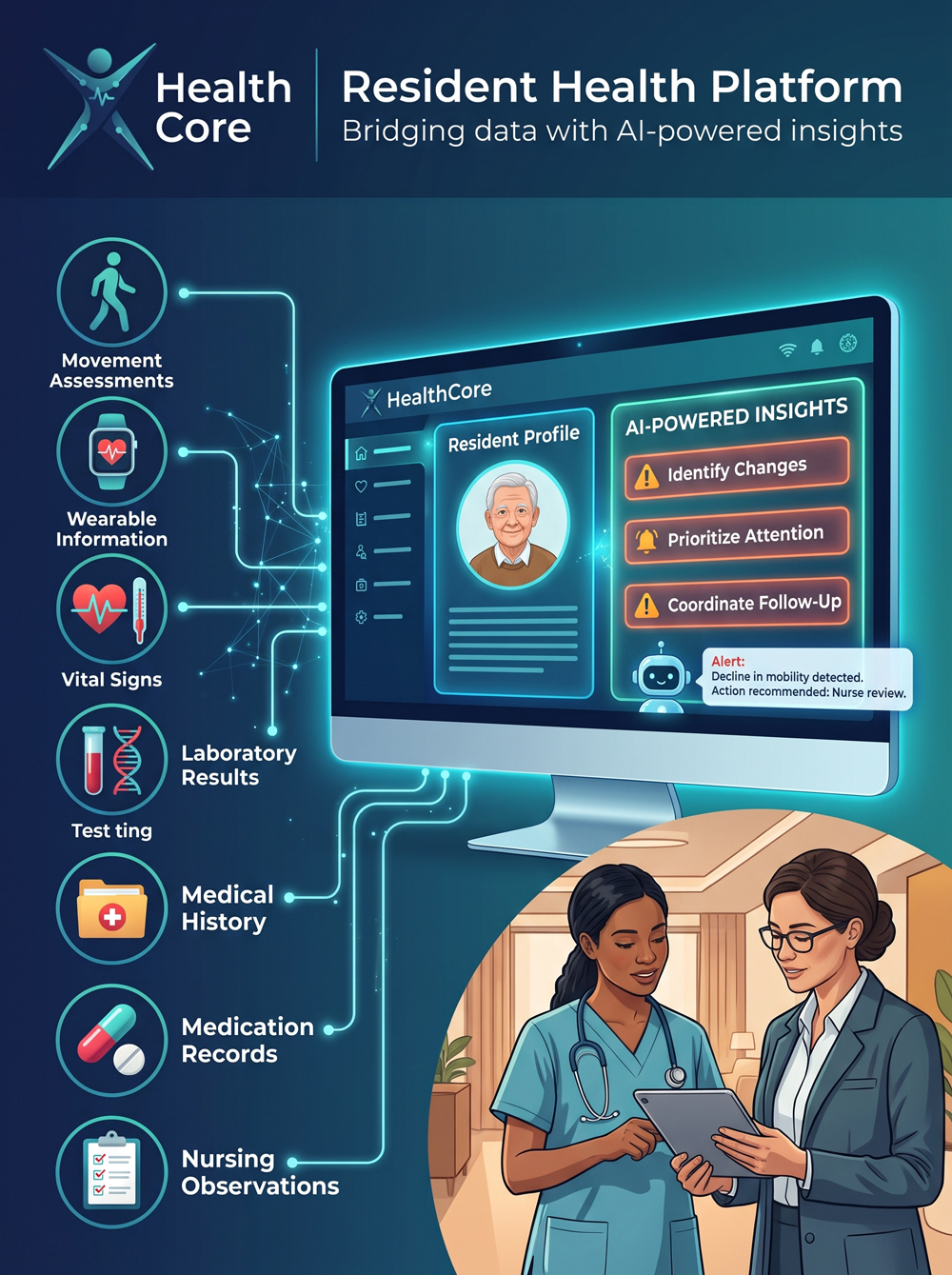
Bring resident health information together and use AI-powered insights to help care teams identify changes, prioritize attention, and coordinate follow-up.
HealthCore is designed to connect movement assessments, wearable information, vital signs, laboratory results, medical history, medication records, and nursing observations in one resident-centred platform.Its AI agent analyses available information, highlights relevant changes, explains potential concerns, and supports care teams in deciding what needs attention next.
Overview
From Fragmented Health Data to Connected Care Intelligence.
Nursing homes generate large amounts of resident information across assessments, observations, medical records, wearable devices, and everyday care activities. When that information remains fragmented, important changes can be difficult to recognize and follow up consistently.HealthCore is designed to bring configured data sources into a unified resident profile and analyse changes over time.Its AI agent helps transform information into structured insights, prioritized alerts, suggested next steps, and follow-up records. The aim is to support earlier recognition of potential concerns and improve coordination between care staff and management—without replacing professional judgement.
Perfect For

Nursing Home Managers

Nursing and Care Teams

Medical and Clinical Directors

Quality and Safety Managers
RMulti-Site Care Operators
Key Features

Unified Resident Health Profile
Bring relevant resident information into one structured view, including configured movement assessments, vital signs, medical history, medication information, laboratory results, wearable data, and nursing observations.
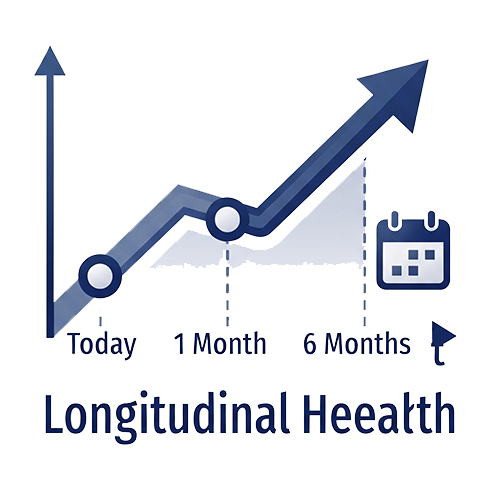
2. Longitudinal Health Monitoring
Display changes over time rather than relying only on isolated observations. Highlight trends in mobility, selected health indicators, and functional performance where suitable data are available.

AI-Powered Risk Intelligence
Analyse available data for configured risk indicators and changes that may warrant review, such as mobility deterioration, fall-related concerns, or changes in physical and functional status.

Prioritized and Explained Alerts
Present potential concerns with an explanation of the contributing information, relevant trends, and the reason the alert has been prioritized.
Personalized Insights and Suggested Actions
Action and Follow-Up Management
Support assignment, documentation, review, and tracking of follow-up actions so that an alert can lead to a documented response.
AI-Generated Summaries
Prepare structured resident summaries, change reports, and management overviews from the information available to the system.
Management Dashboard
Provide an overview of selected health trends, active alerts, outstanding actions, and facility-level patterns.
The HealthCore AI Agent
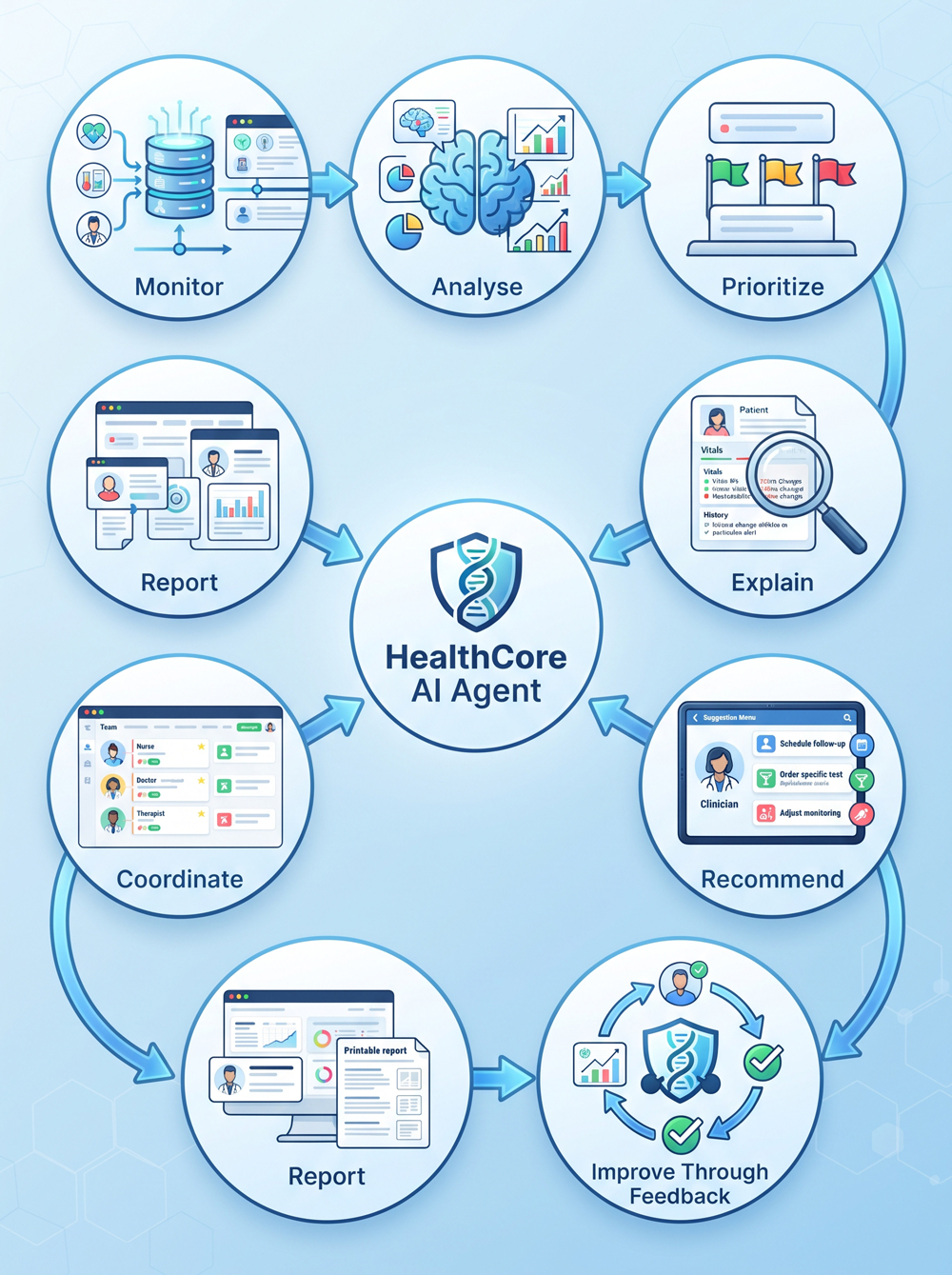
HealthCore's AI agent is designed to support the care workflow from information review to follow-up. It does not simply display data; it helps organize relevant changes, explain potential concerns, and support the people responsible for care.
Monitor
Review incoming or updated information from configured data sources and maintain a longitudinal view of each resident.
Analyse
Identify trends, deviations, and combinations of indicators that may warrant attention.
Prioritize
Organize alerts according to configured risk criteria and available evidence, helping staff focus on the issues most relevant to review.
Explain
Summarize the information contributing to a flag or alert and identify relevant changes in the resident's history.
Recommend
Suggest possible follow-up actions for professional consideration, based on available information and approved workflows.
Coordinate
Support the assignment and documentation of actions, responsible staff, and follow-up status.
Report
Generate resident summaries, outstanding-action lists, and management reports from recorded information.
Improve Through Feedback
Where an appropriate feedback mechanism is implemented and validated, use recorded outcomes to evaluate and refine the usefulness of alerts and prioritization.
The page must not imply that the agent autonomously diagnoses diseases, prescribes medication, or makes final clinical decisions.
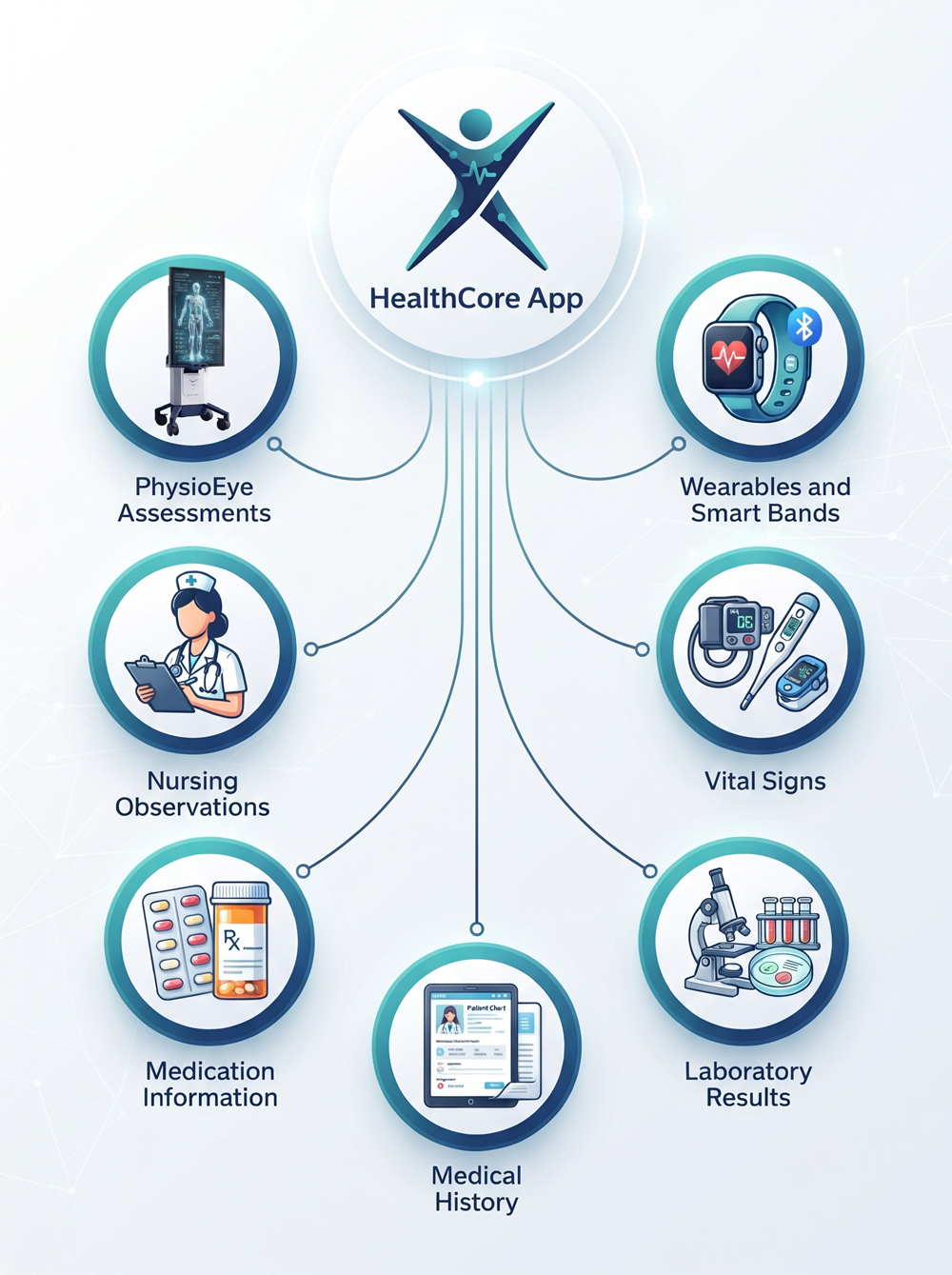
Health Information the Platform Can Connect
PhysioEye Assessments
Posture, gait, mobility, balance, functional movement, ROM, and other supported assessment outputs.
Wearables and Smart Bands
Available activity, movement, and physiological measurements from compatible devices.
Vital Signs
Configured observations such as blood pressure, heart rate, temperature, and other available measurements.
Laboratory Results
Relevant laboratory values and their changes over time, where accessible through the connected data source.
Medical History
Relevant diagnoses, conditions, history, and other permitted resident information.
Medication Information
Medication records and configured medication-related safety indicators, subject to data quality and appropriate clinical rules.
Nursing Observations
Structured observations, care notes, and relevant changes recorded by the care team.
Integration note: The availability of each source depends on the actual connector, data format, access rights, and implementation. The page should distinguish live integrations from planned integrations.
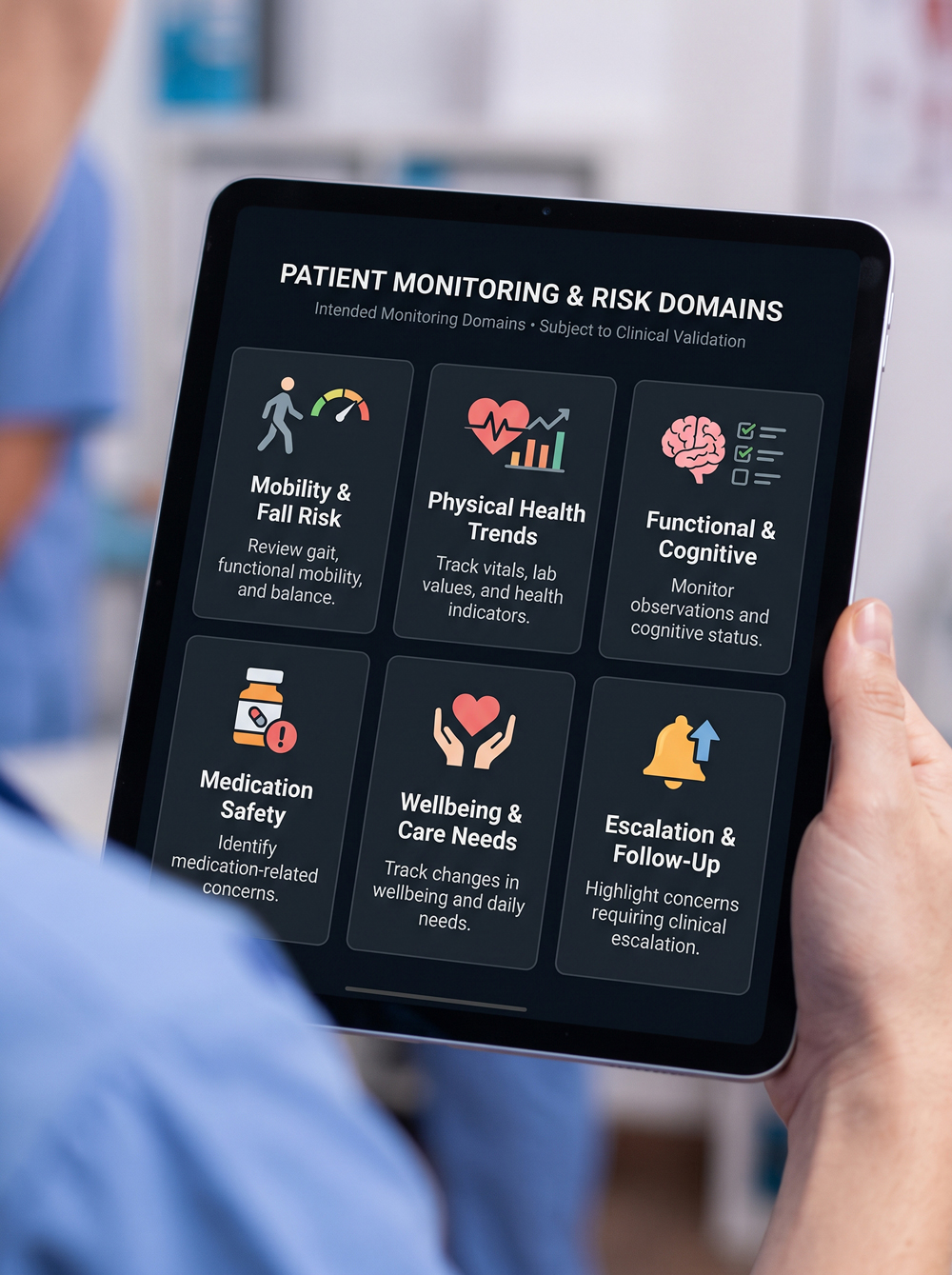
Potential Assessment and Monitoring Domains
Mobility and Fall-Related Risk
Review changes in gait, functional mobility, balance, and other supported indicators that may contribute to fall-related risk.
Physical Health Trends
Track changes in configured vital signs, laboratory values, and other health indicators.
Functional and Cognitive Change
Organize recorded observations and available assessments that may indicate a change in functional or cognitive status. Any interpretation must remain within the capabilities of the data and validated models.
Medication Safety
Help surface configured medication-related concerns or missing information for professional review. Do not claim automated medication validation unless the required clinical rules and data integrations exist.
Wellbeing and Care Needs
Support review of documented changes in wellbeing, daily function, and care needs.
Escalation and Follow-Up
Highlight concerns requiring review under the care organization's configured escalation procedures.
These are intended monitoring domains. Specific risk scores, prediction horizons, and clinical claims should only be published when the corresponding algorithms have been implemented and appropriately validated.
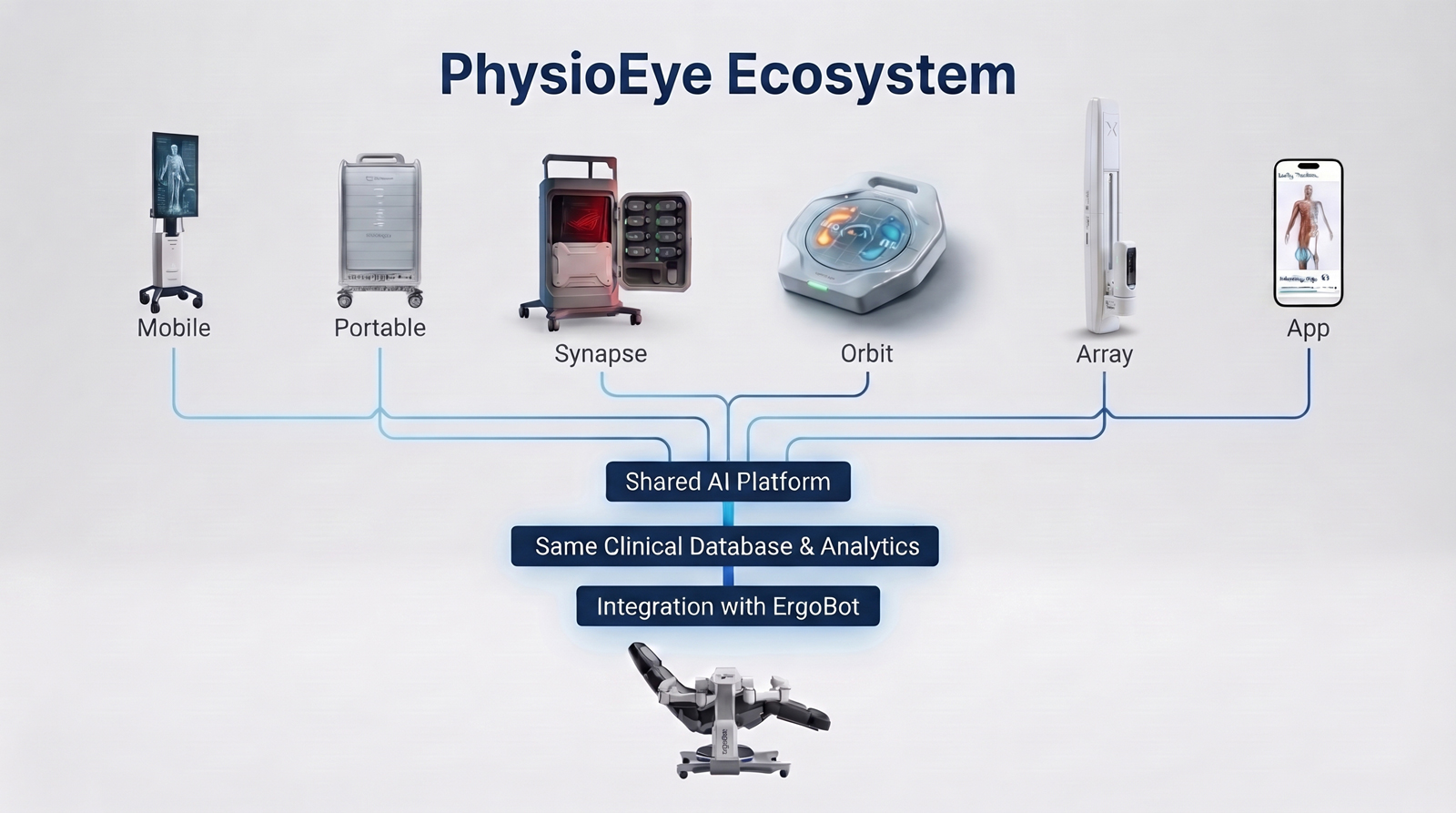
Part of the PhysioEye Ecosystem
PhysioEye Core analyses movement and biomechanics. PhysioEye Synapse adds information about the electrical activity of selected muscles, helping clinicians investigate how muscle activation relates to movement performance.
Together, they are designed to support more detailed assessment and longitudinal monitoring during rehabilitation.