
Robotic Shoulder Rehabilitation: 5 Proven Ways Intelligent Ergotherapy Restores Joint Function
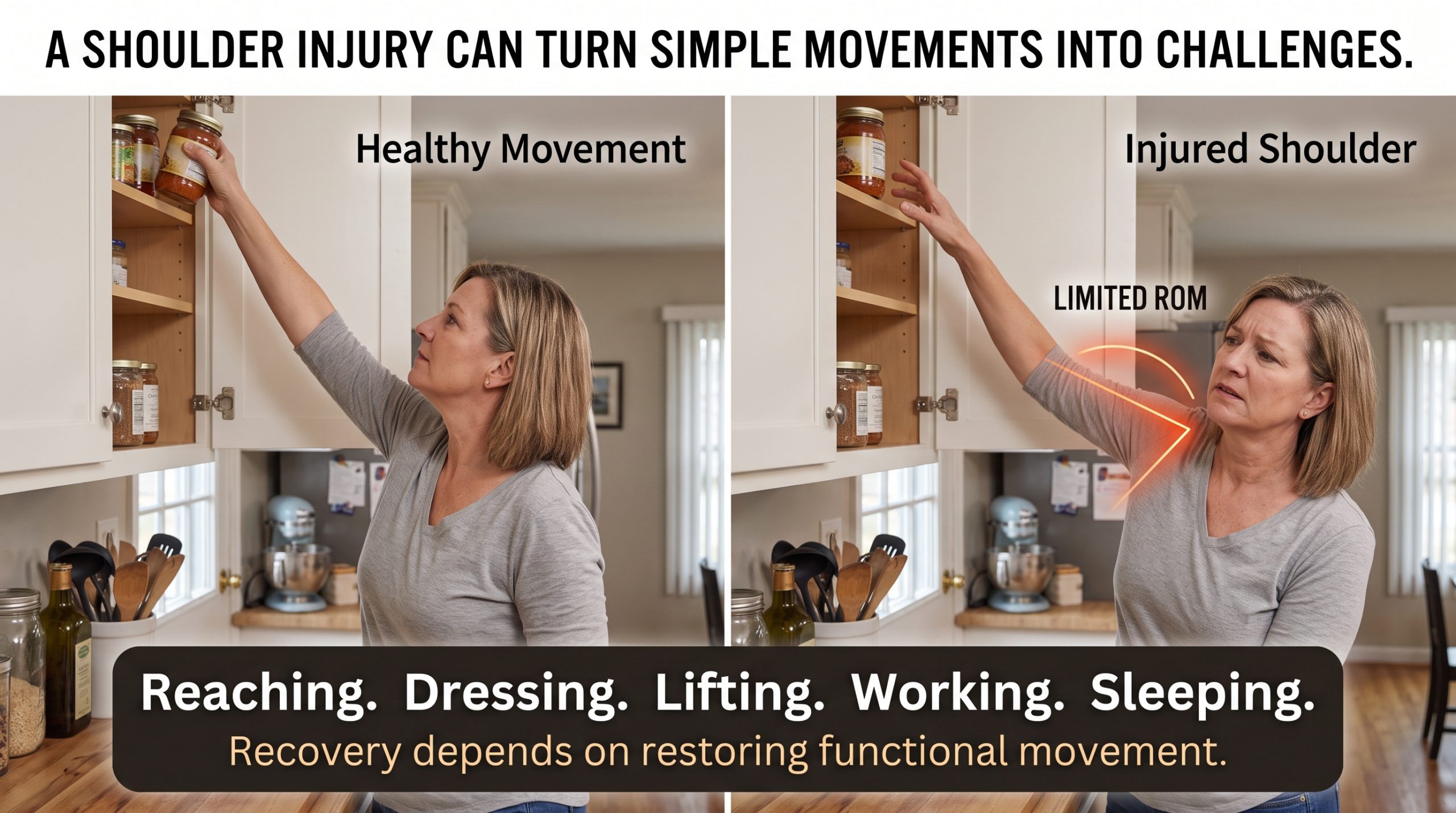
The human shoulder is one of the most biomechanically intricate configurations in the anatomical frame. Functioning as a multi-joint articulation—comprising the glenohumeral, acromioclavicular, sternoclavicular, and scapulothoracic joints—it provides the greatest degrees of freedom and the widest range of motion (ROM) of any joint complex in the human body. However, this high degree of mobility relies on dynamic muscular stabilization rather than rigid bony architecture, leaving the shoulder complex uniquely vulnerable to severe functional degradation following neurological trauma or orthopedic injury.
When a patient suffers a cerebrovascular accident (stroke), traumatic brain injury, or extensive rotator cuff tear, shoulder impairment frequently leads to joint subluxation, severe spasticity, capsular contracture, and long-term functional dependency. In addressing these complex conditions, robotic shoulder rehabilitation has emerged as a fundamental clinical intervention, providing high-dose, quantifiable motor therapy that significantly accelerates neuroplasticity and joint recovery.

Robotic shoulder rehabilitation
Robotic shoulder rehabilitation provides high-dose, objective joint ergotherapy to overcome the sheer physical limitations of manual physical therapy. By utilizing stationary robotics equipped with minimal ring-shaped end-effectors and integrating precise markerless 3D kinematics, clinicians can effectively treat post-stroke hemiparesis and orthopedic injuries, safely accelerating neuroplasticity and functional arm recovery.
The Biomechanical Burden of Shoulder Dysfunction
The shoulder complex relies on fine muscular coordination to perform essential activities of daily living. Following a stroke or major orthopedic surgery, the resulting neuromuscular deficits create profound barriers to mobility. Epidemiological data published by the World Health Organization (WHO) demonstrates that stroke is a leading cause of chronic adult disability globally. Furthermore, clinical registries archived by the National Institutes of Health (NIH) indicate that up to 80% of acute stroke survivors present with severe upper-limb paresis.
Specific shoulder pathologies that demand intensive rehabilitation include:
-
Post-Stroke Hemiparesis: Results in hypertonia, spasticity, and painful internal rotation contractures.
-
Glenohumeral Subluxation: Muscle flaccidity causes the humeral head to drop out of the glenoid fossa, causing severe pain and overstretching of the capsule.
-
Adhesive Capsulitis (Frozen Shoulder): Severe fibrotic thickening of the joint capsule requiring sustained end-range stretching.
-
Rotator Cuff Repairs: Post-operative states requiring strict, passive range-of-motion limits to protect healing tendon-to-bone anchors.
The Limitations of Traditional Manual Physical Therapy
Traditional manual physical therapy remains a cornerstone of physical medicine, but clinicians encounter severe physical constraints when treating the shoulder. The primary physiological barrier to shoulder recovery is the “dosage gap.” Inducing cortical reorganization within the motor cortex requires hundreds of targeted, task-specific shoulder movements per treatment session.
Observational research published in PubMed Central reveals that conventional manual therapy sessions often deliver an average of only 32 functional arm and shoulder repetitions per session. Human therapists physically fatigue; manually guiding a heavy, hemiparetic shoulder through complex 3D arcs of motion for an hour is mechanically unsustainable for the clinician and highly variable for the patient. Furthermore, manually estimating joint resistance leaves the joint vulnerable to micro-tearing during spastic episodes.
5 Proven Ways Robotic Shoulder Rehabilitation Restores Joint Function
To overcome the barriers of manual therapy, robotic interventions provide precise, continuous, and adaptive care. Here are five proven ways intelligent ergotherapy is transforming shoulder recovery.
Bridging the Dosage Gap with High-Volume Repetitions
Advanced robotic systems can safely guide a patient’s shoulder through 500 to 1,000+ movement cycles in a single session. This high-density repetition volume provides the central nervous system with the exact mechanical feedback loop required to rewire motor pathways. A comprehensive systematic review confirms that high-repetition robotic therapy yields statistically significant improvements in upper-extremity Fugl-Meyer motor scores compared to conventional care.
Quantifying Joint Stiffness to Prevent Micro-Trauma
When a therapist manually stretches a spastic joint, they rely on subjective feel. Robotic systems eliminate this subjectivity by integrating continuous force feedback and high-resolution position encoders. These systems continuously quantify passive resistive torque in Newton-meters. If a patient experiences a sudden spastic spasm, the system instantly detects the resistance spike and yields smoothly, reducing spastic tone without the risk of aggressive soft-tissue trauma.
Isolating Movement Safely with Stationary Ergotherapy
For decades, biomedical engineers attempted to build wearable upper-body exoskeletons. However, because the shoulder joint center translates dynamically, a rigid wearable exoskeleton exerts severe unnatural shear forces on the shoulder capsule. The ErgoBot stationary rehabilitation system solves this by abandoning the exoskeleton model entirely. ErgoBot is a stationary upper- and lower-limb rehabilitation robot for all joints. Patients interface with the device using minimal, clinically accurate ring-shaped attachments that connect safely to the limbs. By eliminating outdated fork-shaped mechanisms, these ring interfaces prevent localized pressure spikes, accommodate any arm size, and ensure zero risk of glenohumeral misalignment or over-ground falls.
Guiding Treatment via Markerless 3D Kinematics
Robotic shoulder rehabilitation is most effective when driven by accurate baseline data. By utilizing the PhysioEye markerless motion capture platform, clinicians capture Class Im CE-marked 3D kinematic analysis without attaching physical sensors to the patient’s body. Driven by advanced vision models like ViTPose, the system measures active Range of Motion (ROM) and compensatory trunk leaning with sub-millimeter precision. This objective baseline provides the physical therapist with the exact angular limits and deficits of the joint, allowing them to program perfectly customized, safe movement boundaries into the robotic system.
Adapting to Specific Pathologies with Dynamic Training Modes
A single type of mechanical movement cannot treat every shoulder pathology. True robotic shoulder rehabilitation adapts to the specific stage of tissue healing:
-
Continuous Passive Motion (CPM): Safely moves the flaccid shoulder through pre-programmed arcs to preserve joint capsule flexibility.
-
Active-Assisted Mode: Provides assistance-as-needed. If a patient initiates a movement but lacks the muscular force, the system smoothly supplies the minimal necessary torque to finish the task.
-
Resistive Mode: Applies controlled, fluid resistance to strengthen muscles and provide the sustained stretching required to remodel fibrotic tissue in frozen shoulders.
Frequently Asked Questions
Are stationary rehabilitation robots considered wearable exoskeletons? No. Devices like ErgoBot are strictly stationary upper and lower limb rehabilitation robots designed for joint ergotherapy. They are definitively not exoskeletons or gait-assistance devices. Patients remain comfortably seated and connect via minimal ring-shaped end-effectors, eliminating the mechanical setup hassles, alignment errors, and fall risks associated with wearable suits.
How do advanced robotic systems handle sudden shoulder muscle spasticity? Intelligent systems utilize high-frequency torque sensors that monitor joint resistance thousands of times per second. If a patient experiences an involuntary shoulder muscle contraction or spasm, the system instantly detects the resistance spike and halts or yields smoothly, preventing joint strain and soft-tissue injury.
Why is an objective 3D assessment needed before starting robotic therapy? Systems like PhysioEye provide an objective, markerless baseline of the patient’s active and passive movement capabilities. By measuring exact angular limits and identifying compensatory movement patterns, it provides the therapist with the exact data needed to program perfectly safe movement boundaries on the rehabilitation robot.