Bilateral Arm Therapy: 4 Spectacular Reasons Symmetrical Robotics Eradicate Single-Limb Rehab Flaws
Bilateral Arm Therapy is rapidly exposing the fundamental clinical limitations of traditional, single-limb neurological rehabilitation. In care facilities across Germany—from specialized stroke units in Munich to our operational headquarters in Buchbach—therapists have historically focused strictly on the paralyzed arm following a stroke or traumatic brain injury. The standard approach is to manually stretch and move the damaged limb while the healthy arm remains completely inactive.
However, treating a localized brain injury by isolating a single limb ignores the vast, interconnected neural networks that control human movement. To achieve genuine, lasting recovery, facilities must implement simultaneous, symmetrical movement of both upper limbs.
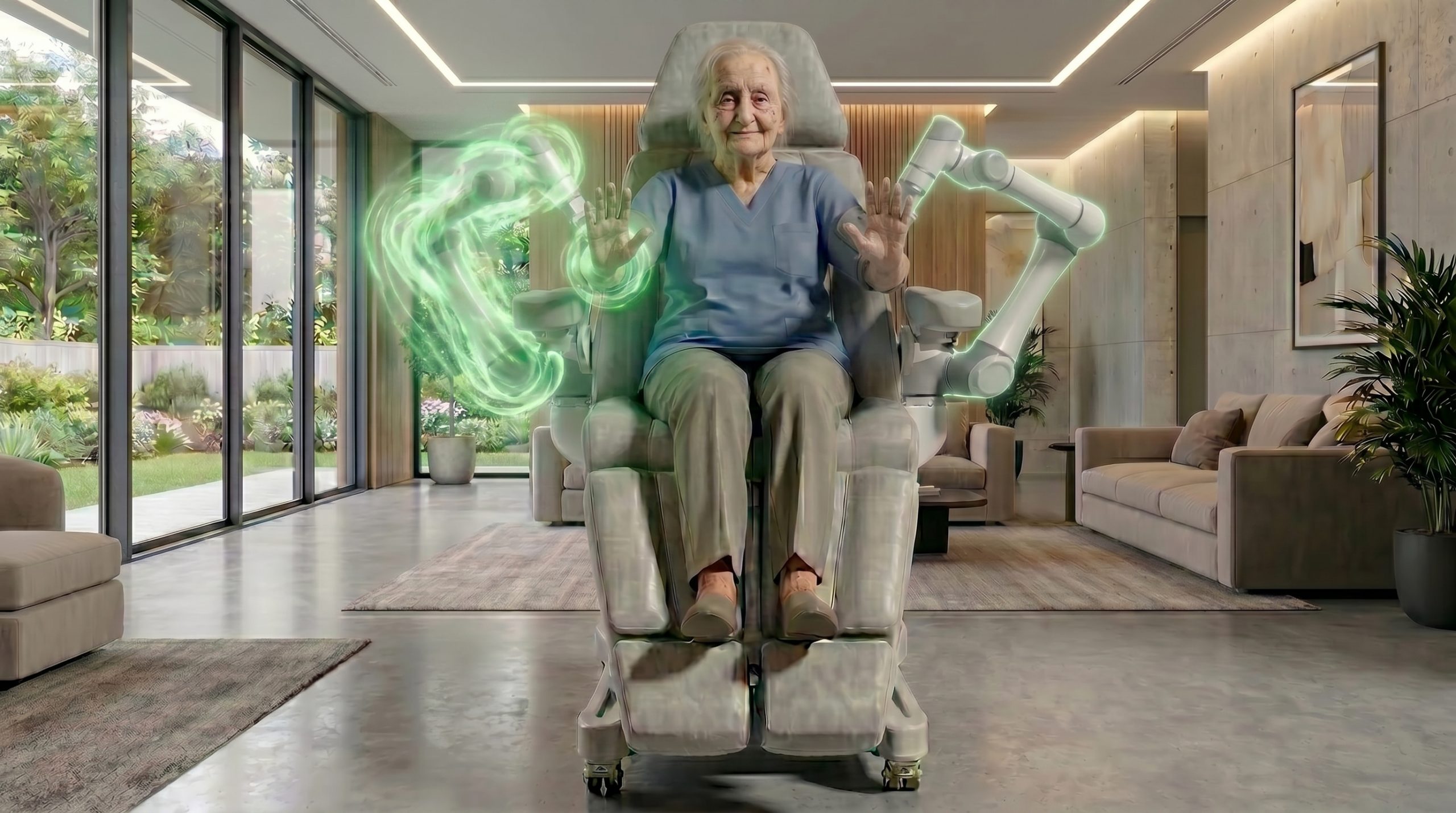
This is the exact science of Bilateral Arm Therapy. By utilizing the highly advanced ErgoBot by Hash-Tech GmbH, clinics can deliver synchronized, dual-limb robotic training that manually overwhelmed therapists simply cannot replicate. As a cornerstone of Robotic Assisted Elderly Care, this approach accelerates recovery in ways unilateral therapy never could.
Here are 4 spectacular, scientifically validated reasons why ErgoBot’s symmetrical robotics eradicate the flaws of single-limb rehabilitation.
Interhemispheric Crosstalk in Bilateral Arm Therapy
The human brain is divided into two hemispheres connected by the corpus callosum. When a stroke damages the motor cortex on one side, single-limb therapy attempts to force that damaged area to heal itself in total isolation. Bilateral Arm Therapy fundamentally changes this paradigm.
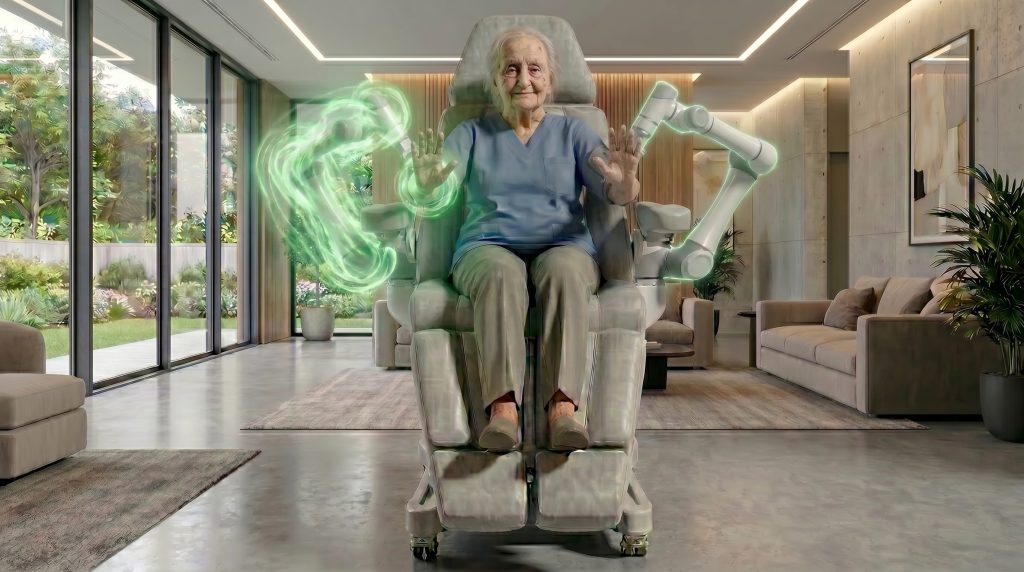
When a patient moves both arms symmetrically using the ErgoBot, the healthy hemisphere of the brain fires simultaneously with the damaged hemisphere. Bilateral arm training facilitates interhemispheric neural interactions, allowing the intact brain hemisphere to actively assist in reorganizing the damaged motor cortex.
By physically forcing this neurological synchronization, ErgoBot maximizes Neuroplasticity Training, driving the brain to rewire its pathways significantly faster than unilateral movement allows.
Breaking Pathological Synergies and Spasticity
Following severe neurological trauma, patients often develop intense spasticity and pathological movement synergies. For example, attempting to lift the arm causes an involuntary, rigid bending of the elbow and wrist. Manual stretching of a single spastic arm is ergonomically exhausting for German nursing staff and highly painful for the patient.
Symmetrical Bilateral Arm Therapy via robotics provides a profound solution. Bilateral repetitive movement actively reduces upper limb spasticity and successfully breaks abnormal flexor synergies in severe stroke patients.
By utilizing the ErgoBot’s AI-calibrated resistance, facilities can deliver highly advanced Spasticity Treatment. The robot uses the kinematic momentum of the patient’s healthy arm to gently guide the paralyzed arm through a flawless trajectory, reducing tonal resistance without triggering pain.
Direct Translation to Bimanual ADLs
One of the greatest frustrations in geriatric rehabilitation is when a patient regains basic movement in a paralyzed arm but still cannot live independently. The reason is simple: the real world is bimanual. Tying shoes, buttoning a shirt, opening a jar, and eating with a knife and fork require both hands working in complex coordination.
By prioritizing Bilateral Arm Therapy, ErgoBot ensures that physical gains translate directly into functional independence. It bridges the gap between basic muscle building and the complex, dual-limb coordination required for crucial Activities of Daily Living (ADL).
High-Dosage Symmetrical Exertion
Overcoming ICU Acquired Weakness or severe stroke paralysis requires thousands of movement repetitions. In a manual clinical setting, attempting to safely guide both of a patient’s arms simultaneously is ergonomically impossible for a single therapist. Stroke patients require hundreds of movement repetitions to trigger neuroplasticity, a high-dosage volume that is physically impossible to achieve through manual therapy alone.
As one of the most capable Robotic Rehabilitation Systems on the market, ErgoBot delivers thousands of perfectly synchronized, symmetrical repetitions in a single session. This high-dosage capacity is the definitive standard of Robotic Assisted Elderly Care, ensuring patients receive the exact volume of therapy required without physically exhausting the clinical staff.
The Standard of Nursing Home Automation in Germany
Relying on unilateral, manual therapy to treat neurodegenerative diseases and stroke leaves critical clinical potential untapped and heavily drains facility budgets. By utilizing ErgoBot to deliver automated, high-dosage Bilateral Arm Therapy, facilities across Germany, Munich, and Buchbach are setting a revolutionary standard in Predictive Care. They are proving that true Nursing Home Automation doesn’t just save operational time; it fundamentally heals the brain.