
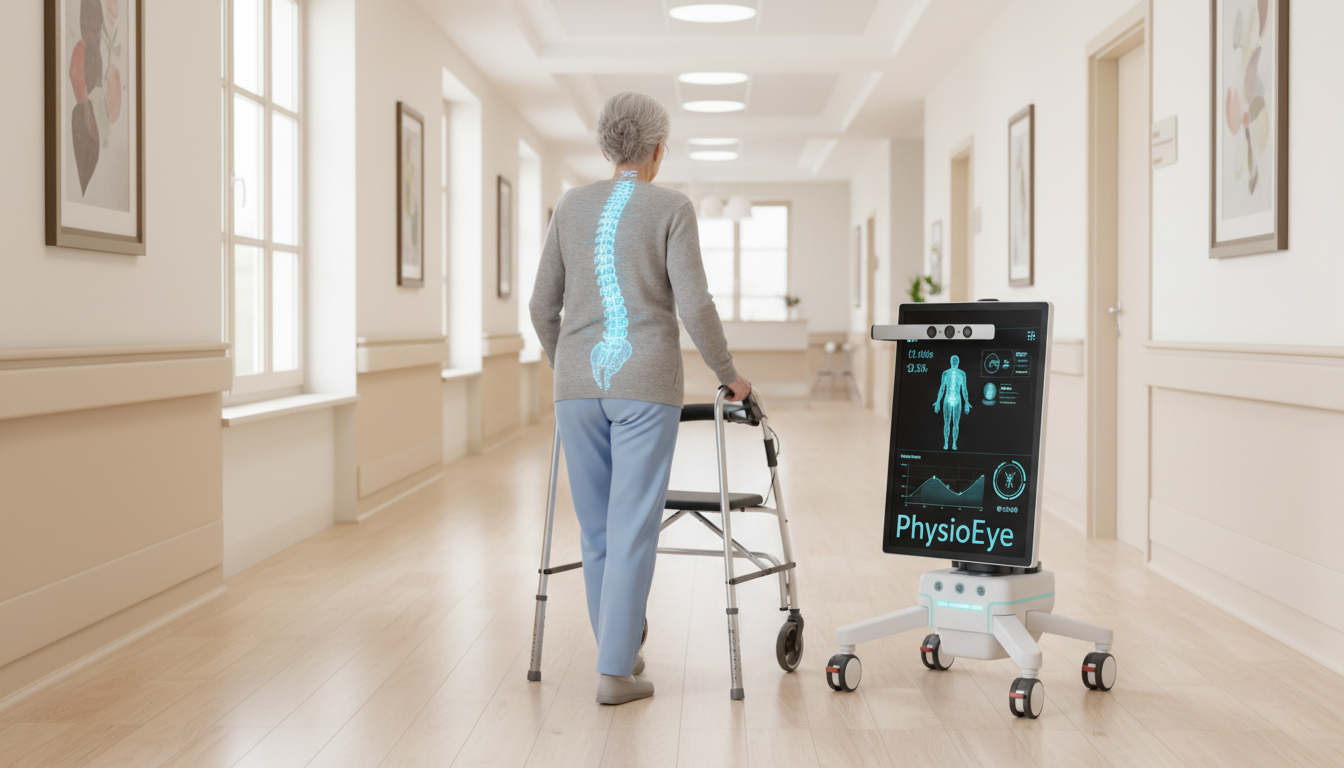
Spinal Curvature Deformity: Solving Chronic Pain by Finding Lordosis and Kyphosis with PhysioEye in less than 1 minute
Spinal Curvature Deformity is a leading, yet frequently mismanaged, driver of chronic pain in the elderly. In nursing home environments, severe back pain is too often dismissed as an inevitable consequence of aging rather than a diagnosable, structural biomechanical failure. Relying on subjective visual assessments leaves pathologically altered spinal curves undetected until they cause catastrophic mobility loss.
To clarify the clinical parameters of the two most important types of Spinal Curvature Deformity:
-
Kyphosis is an excessive outward curvature of the thoracic spine, creating a hunched posture that restricts lung capacity and forward visibility.
-
Lordosis is an excessive inward curvature of the lumbar spine, forcing the pelvis out of alignment and severely compressing the lower vertebrae.
Hash Tech GmbH provides a definitive clinical upgrade. By utilizing PhysioEye, healthcare facilities can deploy markerless AI computer vision to uncover these Spinal Curvature Deformities. This transition from subjective guesswork to objective data is essential for solving chronic pain, preventing falls, and implementing effective Nursing Home Automation.
The Biomechanical Root of Chronic Pain
Before addressing the financial toll of back pain in elderly care, the clinical causation must be established.
A Spinal Curvature Deformity fundamentally shifts the body’s biomechanics. Prolonged structural misalignment increases mechanical stress in the lower back, compresses lumbar discs, and irritates nerve roots, directly causing chronic low back pain. When the spine drifts into pathological lordotic or kyphotic angles, the surrounding musculature must constantly compensate, leading to chronic spasms, radiating nerve pain, and a severe loss of mobility.
The Scope of the Deformity in Older Adults
The prevalence of these specific structural issues in the geriatric population represents a systemic crisis in long-term care.
-
Hyperkyphosis Prevalence: Age-related hyperkyphosis—an exaggerated anterior curvature of the thoracic spine—affects up to 40% of the older adult population.
-
Hyperlordosis Prevalence: The physiological decline of the spine also severely impacts the lumbar region. By age 75 and older, the prevalence of clinically significant hyperlordosis reaches 10.4%, with patients often suffering from compounding kypholordotic deviations.
The Financial Burden of Deformity-Driven Pain
Because a Spinal Curvature Deformity directly causes severe, chronic lower back pain, the resulting financial burden on the healthcare sector is immense.
This deformity-driven back pain costs the German economy $71.6 billion USD annually through direct medical interventions, lost productivity, and prolonged care dependency. For nursing homes, chronic pain from undetected lordosis or kyphosis accelerates a resident’s physical decline. This requires a rapid escalation in care classification (Pflegegrad), demanding more staff hours, specialized lifting equipment, and costly pain management pharmaceuticals.
How PhysioEye Solves the Diagnostic Gap
Traditional radiography (X-rays) exposes frail patients to radiation and cannot be used for continuous daily monitoring. PhysioEye digitizes the biomechanical assessment to catch these deformities safely.
Precision Lumbar Analysis: Unlike basic posture-tracking apps that merely offer a general curve analysis, PhysioEye is engineered for deep clinical utility. The system utilizes advanced, proprietary Python-driven algorithms specifically intended to calculate the bending of the lumbar spine. This isolates the precise degree of lordotic curvature, providing orthopedists with the exact kinematic data required to diagnose hyperlordosis accurately.
Thoracic Kyphosis Tracking: Simultaneously, the 3D depth-sensing cameras map the thoracic region. By establishing a continuous Senior joint mobility assessment, the AI flags progressive kyphotic deviations long before they result in a compression fracture.
From Diagnosis to Automated Intervention
Identifying the exact curvature through an Automated Mobility Assessment is the critical first step toward resolving the resident’s chronic pain.
If the deformity is driven by muscular imbalances or joint stiffness, the diagnostic data is seamlessly integrated with ErgoBot. This allows facilities to deliver precise Robotic Assisted Occupational Therapy, safely correcting the posture and alleviating the pain at its source.
Regional Leadership in Bayern
From our engineering center in Buchbach, Hash Tech GmbH is equipping clinics across Munich and Bayern with the tools to eradicate undetected musculoskeletal pain. By integrating advanced AI diagnostics into daily care, we are delivering the Elderly Care Solutions necessary to transform nursing homes into centers of proactive, Predictive Care.