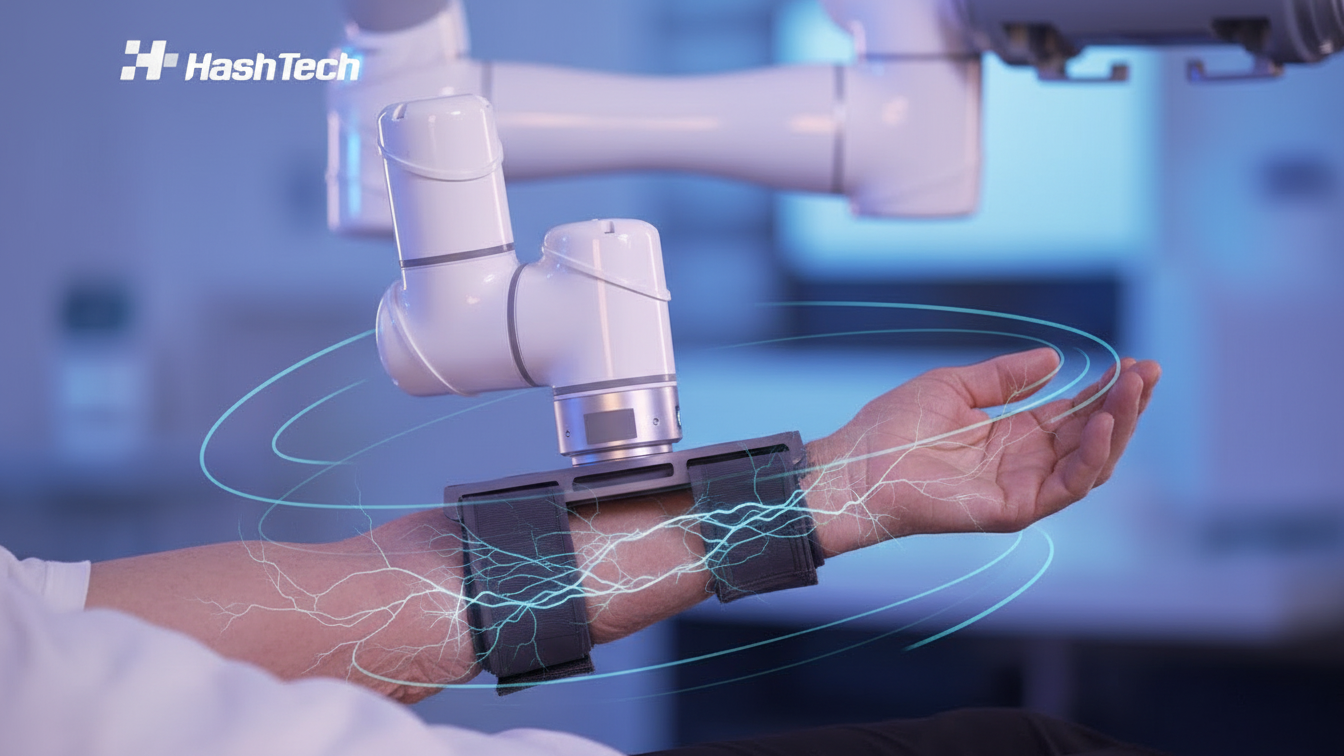
A Revolutionary Path to Robotic Stroke Rehabilitation: Meet ErgoBot
Robotic Stroke Rehabilitation is rapidly emerging as one of the most decisive transformations in European neurorehabilitation. As stroke incidence accelerates while healthcare workforces shrink, traditional therapy models are structurally incapable of delivering the intensity, repetition, and continuity required for neurological recovery. Robotic Stroke Rehabilitation directly addresses this gap—especially when deployed inside a Robotic Assisted Nursing Home environment powered by Nursing Home Automation.
At the center of this shift stands ErgoBot, developed by Hash Tech GmbH. Designed specifically for institutional care, Robotic Stroke Rehabilitation with ErgoBot enables scalable, high-dose, data-driven therapy while preserving therapist expertise rather than replacing it.
The Growing Stroke Burden Driving Robotic Stroke Rehabilitation
Europe is facing an unprecedented neurological care challenge. According to the European Stroke Organisation, more than 1.1 million new strokes occur annually in Europe, with nearly 10 million people living with long-term stroke consequences.
The World Health Organization confirms stroke remains the second leading cause of death and third leading cause of disability worldwide.
This epidemiological pressure makes Robotic Stroke Rehabilitation not a technological luxury, but a clinical and economic necessity—particularly in aging regions such as Bayern, where stroke prevalence increases sharply beyond age 65.
The Rehabilitation Gap: Why Traditional Therapy Cannot Scale
Despite decades of clinical knowledge, stroke rehabilitation delivery remains critically underpowered:
-
Only ~30% of European stroke patients access dedicated stroke units
-
Merely 13.3% receive recommended therapy dosage
-
Community survivors often receive 5–8 minutes of therapy per day
-
Up to 50% experience permanent disability
These findings are documented in European rehabilitation outcome analyses
(https://pubmed.ncbi.nlm.nih.gov/32247693/).
Robotic Stroke Rehabilitation directly addresses this rehabilitation gap by automating high-frequency, task-specific movement—something human-only models cannot sustain at scale.
Neuroplasticity Demands Intensity—Robotic Stroke Rehabilitation Delivers It
Stroke recovery depends on neuroplasticity, particularly during the first three months post-stroke, often referred to as the “golden window.” Research consistently shows that neurological recovery is dose-dependent, driven by high-repetition, consistent movement.
Traditional therapy models cannot deliver thousands of repetitions daily. Robotic Stroke Rehabilitation, however, enables exactly that.
With ErgoBot, patients can perform over 1,000 controlled movements per hour, compared to roughly 289 movements in conventional one-to-one sessions. This intensity directly accelerates cortical reorganization and functional recovery.
ErgoBot as the Engine of Robotic Stroke Rehabilitation
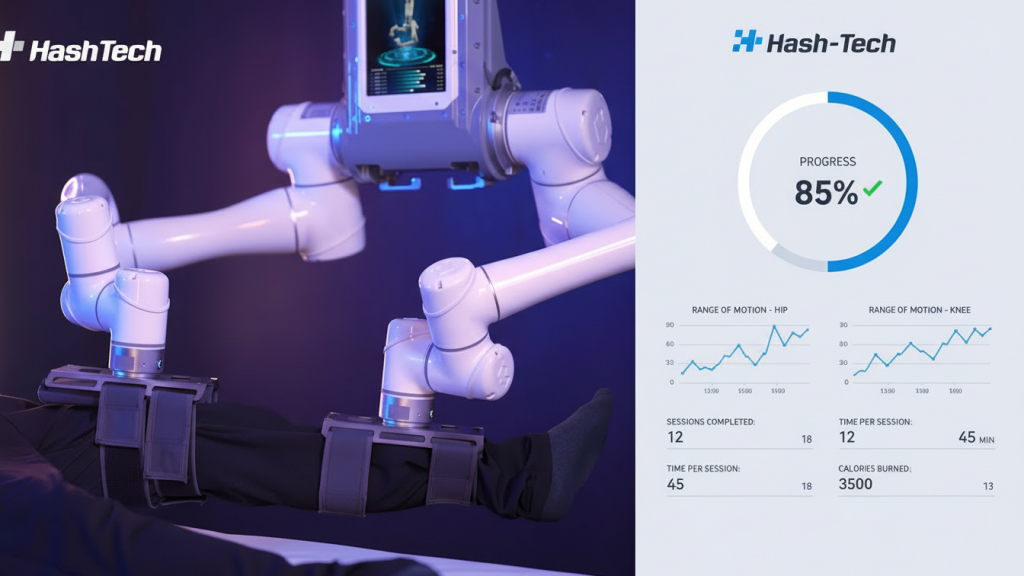
Robotic Stroke Rehabilitation with ErgoBot is built around scalability, precision, and workforce sustainability. Inside a Robotic Assisted Nursing Home, ErgoBot enables:
-
Workforce multiplication: one therapist supervising multiple patients simultaneously
-
Standardized therapy delivery with programmable joint-specific protocols
-
Objective progress tracking, eliminating subjective variability
-
Physical workload reduction, lowering therapist burnout
This model integrates seamlessly with Robotic Assisted Ergotherapy, Robotic Assisted Occupational Therapy, and Robotic Assisted Rehabilitation, forming a unified automation layer within modern care facilities.
Closing the Workforce Crisis Through Nursing Home Automation
Europe is heading toward a 4+ million healthcare worker shortage by 2030, according to the OECD and WHO.
Germany alone reports:
-
35,000+ vacant nursing positions
-
Severe shortages in occupational and neuro-rehabilitation disciplines
This makes Nursing Home Automation essential. Robotic Stroke Rehabilitation allows care facilities to maintain therapy intensity even when staffing is constrained.
When combined with PhysioEye for automated assessment, facilities achieve continuous monitoring, objective therapy planning, and optimized Robotic Assisted Rehabilitation workflows—without increasing staffing requirements.
Regional Leadership: Bavaria as a Model for Robotic Stroke Rehabilitation
Bayern, and specifically the Munich–Buchbach innovation corridor, is rapidly emerging as a regional leader in Robotic Stroke Rehabilitation. With an aging population, high stroke incidence, and acute workforce shortages, Bavaria represents the exact conditions where Robotic Assisted Nursing Home models prove their value.
By deploying ErgoBot and PhysioEye together, facilities in Southern Germany are setting a new benchmark for scalable neuro-rehabilitation—combining Nursing Home Automation, Robotic Assisted Ergotherapy, and data-driven therapy planning.
This regional leadership positions Hash Tech GmbH not only as a technology provider, but as a structural partner in Germany’s long-term care transformation.
Conclusion: Robotic Stroke Rehabilitation Is Now a Structural Requirement
Robotic Stroke Rehabilitation is no longer a future vision—it is a present-day solution to Europe’s neurological care crisis. By combining intensity, precision, and automation, ErgoBot enables rehabilitation systems to survive workforce shortages while dramatically improving patient outcomes.
Inside a Robotic Assisted Nursing Home, supported by Nursing Home Automation and integrated assessment via PhysioEye, Robotic Stroke Rehabilitation becomes scalable, sustainable, and economically viable.
As stroke prevalence rises across Europe, especially in regions like Bayern, Robotic Stroke Rehabilitation is no longer optional—it is the foundation of modern neuro-care.
👉 Learn more about ErgoBot and robotic rehabilitation solutions:
https://hash-tech.eu/ergobot-robotic-assisted-ergotherapy-for-smarter-rehabilitation/