
Parkinson’s Early Signs: How Automated Screening With PhysioEye Exposes Hidden Tremors Manual Tests Miss
Parkinson’s Early Signs are notoriously difficult to distinguish from the general “slowing down” of aging. In the early stages, subtle changes in gait, balance, and tremor are often invisible to the naked eye, leading to a diagnostic delay that can last years. Misdiagnosis rates for Parkinson’s disease remain alarmingly high, with research suggesting that up to 25% of clinical diagnoses may be incorrect in the early stages.
At Hash Tech GmbH, we believe that relying on subjective observation is no longer sufficient. By deploying PhysioEye, we provide clinicians with the objective, quantitative data needed to identify Parkinson’s Early Signs long before a fall occurs. This shifts the focus from reactive treatment to Predictive Care, ensuring that residents in Nursing Home Automation environments receive the timely support they need.
The Challenge of Detecting Parkinson’s Early Signs
The traditional clinical assessment of Parkinson’s Early Signs relies heavily on visual rating scales like the UPDRS. However, these methods suffer from significant inter-rater variability and “snapshot bias”. A resident might perform well during a scheduled doctor’s visit due to the “white coat effect,” masking the Parkinson’s Early Signs that manifest during their daily routine.
Furthermore, symptoms like bradykinesia (slowness of movement) or subtle resting tremors are easily confused with frailty or sarcopenia. Without precision measurement, a treatable neurological condition may be dismissed as “old age,” denying the patient access to targeted Parkinson’s rehabilitation.
PhysioEye: Unveiling the Invisible with AI
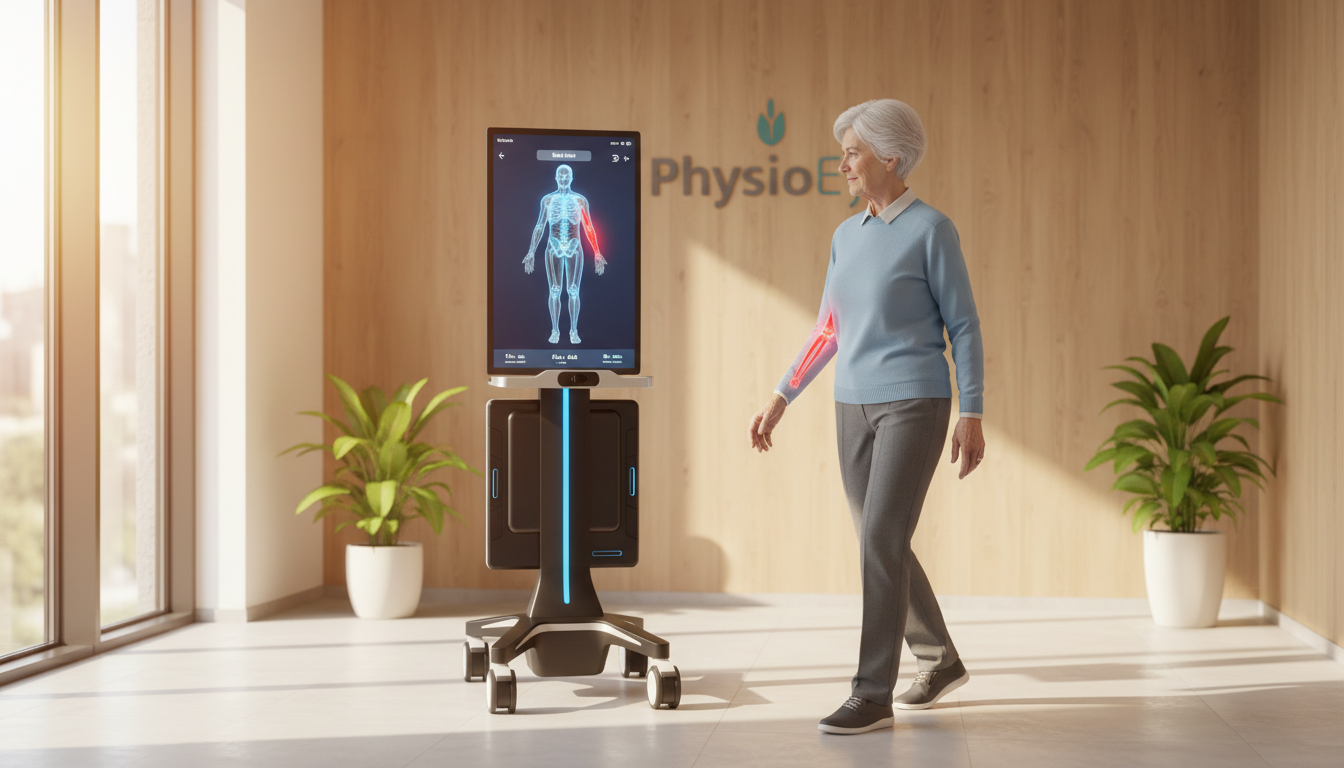
PhysioEye utilizes markerless 3D human motion capture technology to digitize clinical assessment. By performing a routine Automated Mobility Assessment, the system can detect Parkinson’s Early Signs that are imperceptible to human observers.
Key metrics include:
-
Tremor Analysis: Detecting high-frequency oscillations during resting or action states that may indicate early neurological instability.
-
360° Turn Test: Analyzing turn decomposition (number of steps to turn), a validated marker for Parkinson’s Early Signs and fall risk.
-
Gait Asymmetry: Quantifying the difference between left and right step length, as unilateral deficits are a hallmark of early Parkinson’s.
This objective data supports clinical decision-making (non-diagnostic), providing the evidence needed to justify a referral to a neurologist or the initiation of Robotic Assisted Rehabilitation.
Differentiating Frailty from Neurological Decline
One of the most complex challenges in geriatrics is distinguishing between physical frailty and neurological degradation. Parkinson’s Early Signs often mimic the muscle weakness associated with sarcopenia. PhysioEye addresses this through a multi-layered assessment portfolio.
By combining the Short Physical Performance Battery with specific Gait Analysis metrics like Double Support Time , the system generates a Frailty Risk Score alongside neurological indicators. If a patient shows high muscle power in a Sit-to-Stand test but significant gait variability, it points towards a motor control issue (like Parkinson’s Early Signs) rather than simple muscle weakness. This distinction is critical for selecting the right Elderly Care Solutions.
Longitudinal Monitoring of Parkinson’s Early Signs
Parkinson’s Early Signs are progressive. A single test is rarely enough to capture the full picture. The power of PhysioEye lies in its ability to perform a Longitudinal mobility assessment.
By tracking a resident’s movement profile over months, the system identifies deviations from their personal baseline. A gradual reduction in arm swing or a subtle increase in turn duration triggers a functional decline flag. This allows care teams to intervene with Fall Prevention for Seniors strategies immediately, rather than waiting for a catastrophic event.
From Assessment to Intervention with ErgoBot
Identifying Parkinson’s Early Signs is only the first step; the second is treatment. Once PhysioEye identifies a motor deficit, ErgoBot provides the solution.
For patients exhibiting rigidity or bradykinesia, ErgoBot delivers high-intensity Robotic Assisted Occupational Therapy. The system’s ErgoBot PhysioEye integration ensures that therapy is targeted exactly where the Senior joint mobility assessment found limitations. This closed-loop approach is essential for maintaining Senior independence in the face of a progressive disease.
Economic Impact and Regional Leadership
The economic burden of Parkinson’s disease in Europe is estimated at €13.9 billion annually, with costs skyrocketing as disability increases. Early detection of Parkinson’s Early Signs allows for earlier intervention, which preserves mobility and delays the need for high-level nursing care.
Accurate documentation of Parkinson’s Early Signs via Automated Mobility Assessment also secures the appropriate Pflegegrad classification, ensuring facilities are reimbursed for the complex care they provide. From our headquarters in Buchbach, Hash Tech GmbH is leading this technological revolution. We are equipping facilities in Munich and across Bayern with the Robotic Assisted Nursing Home infrastructure needed to detect Parkinson’s Early Signs and protect the future of German healthcare.