
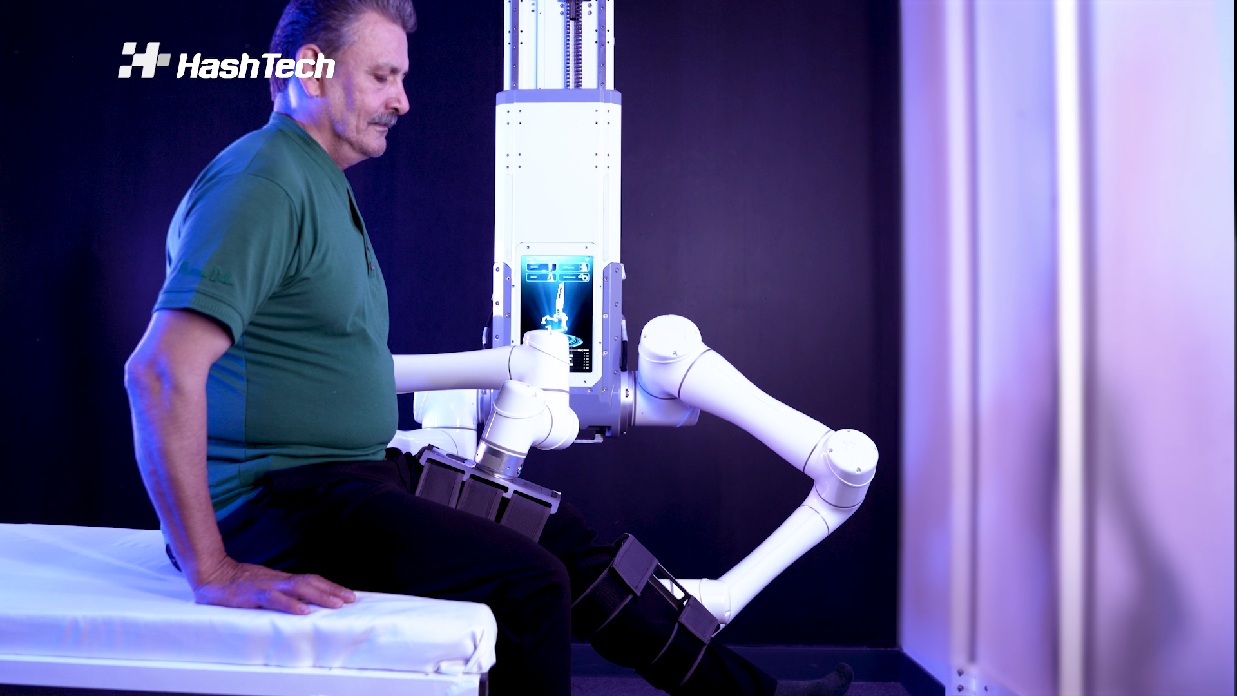
The Hidden Risk After Surgery: Why Knee Replacement Rehabilitation Needs ErgoBot
Knee Replacement Rehabilitation is widely recognized as a necessary step after total knee replacement surgery, yet one of the greatest hidden risks to long-term success is the inadequacy of conventional rehabilitation. Clinical evidence shows that standard programs often fail to deliver the intensity, frequency, and objective assessment needed to restore joint function, reduce knee pain, and re-establish mobility. This gap is particularly pronounced in older adults, where insufficient rehabilitation contributes to functional decline, increased risk of falls, and prolonged dependency.
This is why Knee Replacement Rehabilitation today must integrate high-dose, data-driven, and automated methods — anchored in solutions like ErgoBot, which elevate traditional therapy into the era of Robotic Assisted Rehabilitation.
The Clinical Context: Why Rehabilitation Matters After Knee Replacement Surgery
Total knee replacement (TKR), also known as knee replacement surgery, is increasingly common for advanced osteoarthritis and severe knee pain. While TKR reliably relieves pain and improves quality of life, rehabilitation determines outcomes. Standard clinical studies involving over 50 randomized controlled trials report that structured post-surgical rehabilitation programs significantly improve activities of daily living, knee range of motion (ROM), and pain levels compared with no formal rehabilitation, although the best model of care remains uncertain.
Another meta-analysis focused on robot-assisted rehabilitation after TKR found that robotic systems significantly enhanced active and passive ROM and functional scores compared with conventional therapy and even reduced hospital stay length — supporting the clinical value of automation in Knee Replacement Rehabilitation.
However, conventional rehabilitation still struggles with:
-
low repetition rates
-
inconsistent intensity
-
subjective therapist-dependent measures
-
limited session frequency
All of which undermine recovery potential.
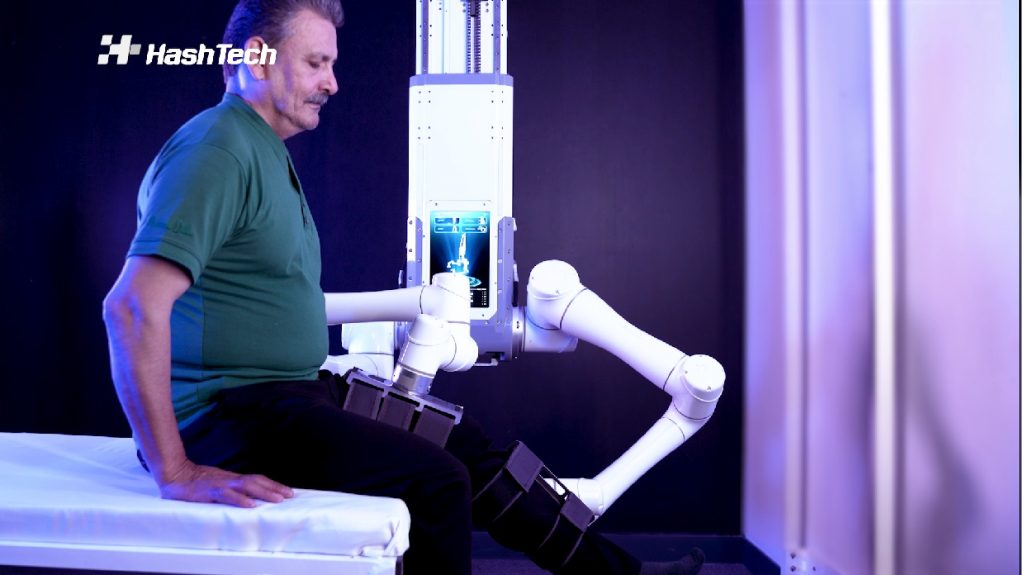
The Hidden Risk: Post-Surgical Functional Decline Without Objective Assessment
Traditional therapy after total knee replacement largely depends on manual evaluations and episodic measurements of mobility. This approach fails to capture nuanced declines in joint mechanics, symmetry, and load distribution — parameters essential to robust functional recovery and Fall Prevention for Seniors.
Studies confirm that higher repetition and higher intensity exercise significantly impact knee flexion, strength, and functional mobility in TKR patients compared with lower-dose programs, even when pain is controlled.
This underscores a critical truth: without continuous, objective tracking, improvement plateaus and risks persist.
ErgoBot and the Evolution of Knee Replacement Rehabilitation
ErgoBot represents the next frontier of Knee Replacement Rehabilitation by combining robotics with precision therapeutic programming. Unlike one-to-one manual therapy, ErgoBot supports:
-
High-repetition joint mobilization beyond human capacity
-
Precise, programmable motion patterns for knee flexion and extension
-
Integration with PhysioEye for objective Elder Mobility Assessment
-
Capture of functional data critical to Senior joint mobility assessment
This robotic approach aligns with clinical understanding that rehabilitation response is dose dependent, and that neuromuscular engagement, repetition, and consistency drive recovery. A 2024 meta-analysis of post-TKA rehabilitation found that interventions targeting ROM and strength early post-surgery reduce pain and accelerate mobility improvements, even though traditional programs are limited by dose and supervision.
Robotic Assisted Rehabilitation Enhances Functional Movement Beyond Conventional Therapy
Rehabilitation science emphasizes “functional movement” — the coordinated action of joints, muscles, and neural control required for daily tasks like walking, balance, and stair climbing. Robot-enhanced therapy improves these parameters by enabling:
-
Consistent, controlled motion patterns
-
Objective tracking of performance metrics
-
Quantifiable progress over time
-
Reduced therapist fatigue and variation
Compared with conventional therapy, robot-assisted systems have been shown to improve patient outcomes in early mobility, pain reduction, and ROM. While results vary across studies, the trend towards robotic effectiveness is clear and growing.
Integration Across Modern Care Pathways
Within modern nursing home automation and Robotic assisted nursing home environments, Knee Replacement Rehabilitation gains strategic scale. Robotics combined with digital monitoring allow therapy outside standard sessions, providing continuity when human resources are limited.
When integrated with:
ErgoBot becomes not only a therapy device but a continuous clinical partner at every stage of recovery.
This integration supports broader Elderly Care Solutions that ensure:
-
objective measurement of progress
-
proactive fall prevention
-
personalized progression pathways
-
reduced long-term dependency
The Economic and Clinical Imperative of Objective Rehabilitation
Studies show home-based rehabilitation can be comparable to outpatient therapy in certain outcomes, emphasizing the importance of adherence and structure. However, neither traditional home programs nor standard clinic sessions provide the precision, adaptability, and repeatability required for optimal recovery after knee pain–related surgical intervention.
In contrast, robotic systems like ErgoBot scale intensive engagement and capture real-time data, enhancing Geriatric Physical Therapy planning and execution. This delivers measurable outcomes while reducing the long-term care burden — a critical factor for health systems and families alike.
Conclusion: Why Knee Replacement Rehabilitation Needs ErgoBot
The journey from surgery to sustained function hinges on rehabilitation quality. A system that delivers repetitive precision, objective data, and scalability—like ErgoBot —directly addresses the hidden risks of inadequate traditional care after knee replacement surgery.
As robotic technology becomes more integrated into nursing home automation and Robotic Assisted Nursing Home workflows, the combination of robotic execution and real-time assessment will increasingly define what “good recovery” truly means.
Knee Replacement Rehabilitation is no longer merely a clinical protocol — it is a measurable, data-driven process that must harness automation to deliver reliable, repeatable, and patient-centered outcomes. With ErgoBot developed and deployed from Bayern, Germany, and real-world implementations driven from Munich and Buchbach, Hash Tech GmbH is actively shaping the future of robotic rehabilitation at a regional and national level. By combining German engineering, clinical biomechanics, and scalable Robotic Assisted Rehabilitation, Hash Tech is positioning Bavaria as a leading innovation hub for advanced orthopedic recovery and modern nursing home automation — setting new standards for knee replacement recovery across Germany and beyond.
👉 Learn more about how ErgoBot accelerates knee rehabilitation:
🔗 https://hash-tech.eu/ergobot-robotic-assisted-ergotherapy-for-smarter-rehabilitation/